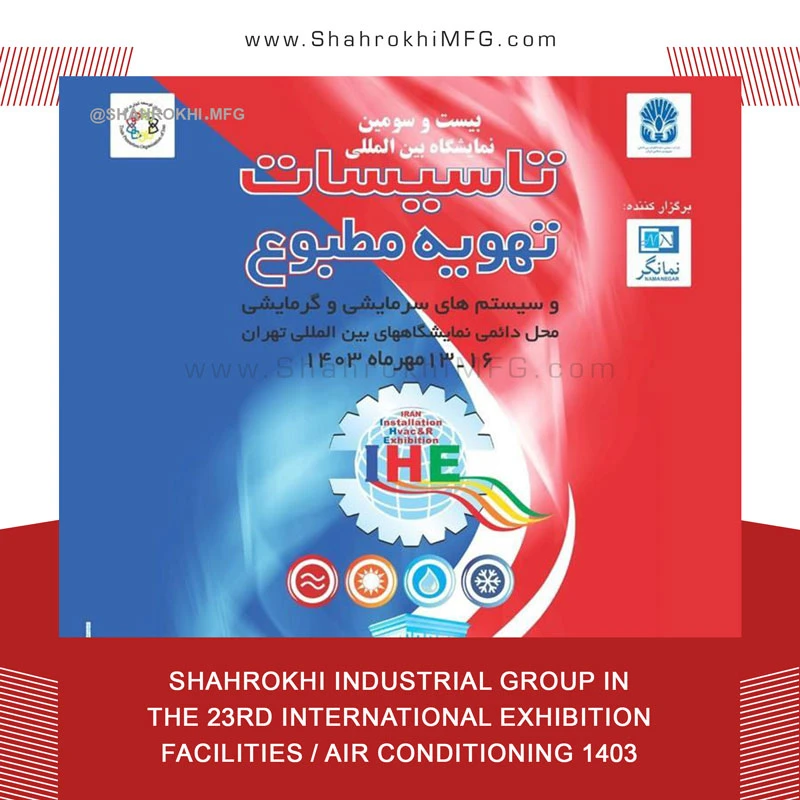
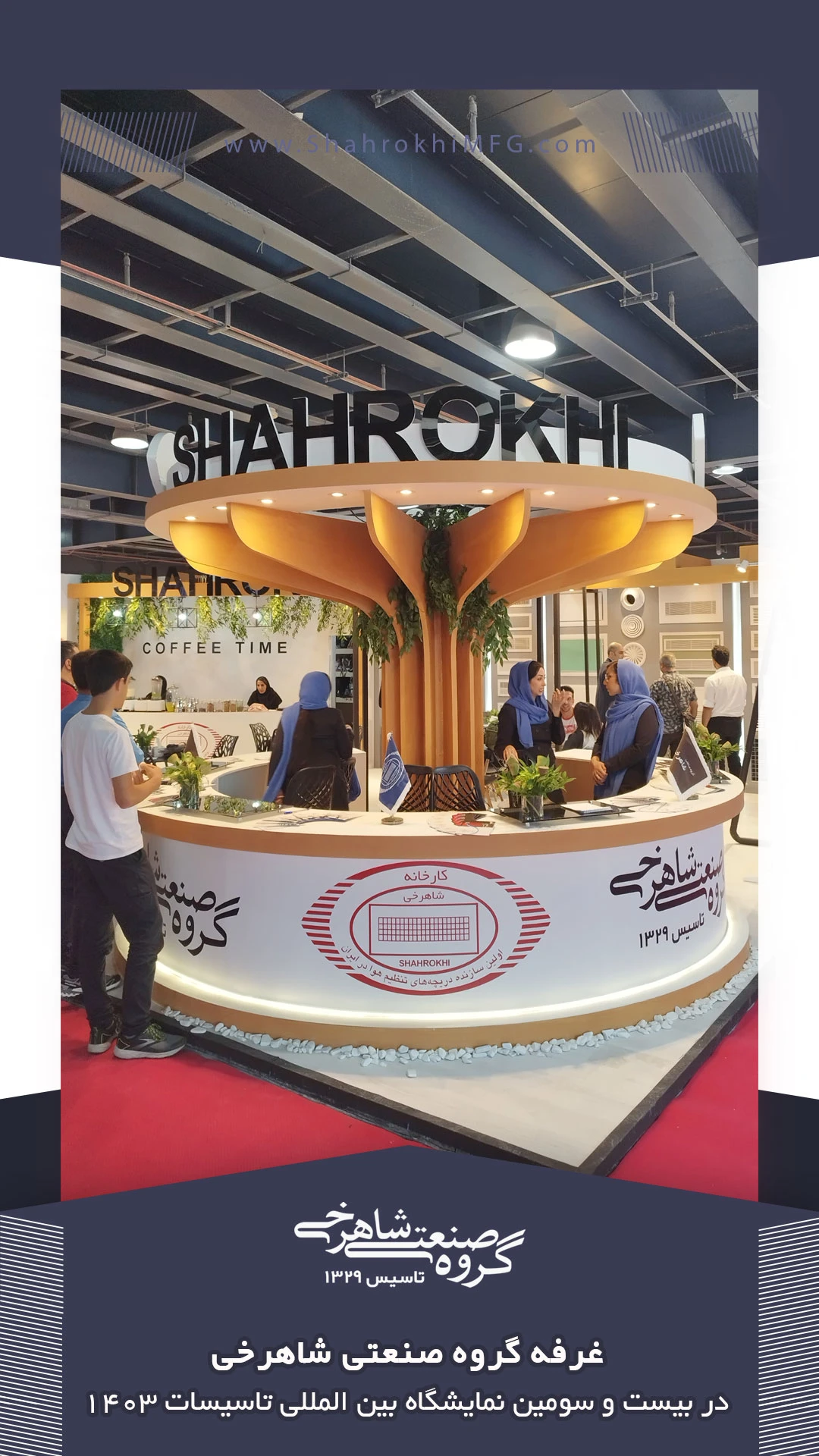
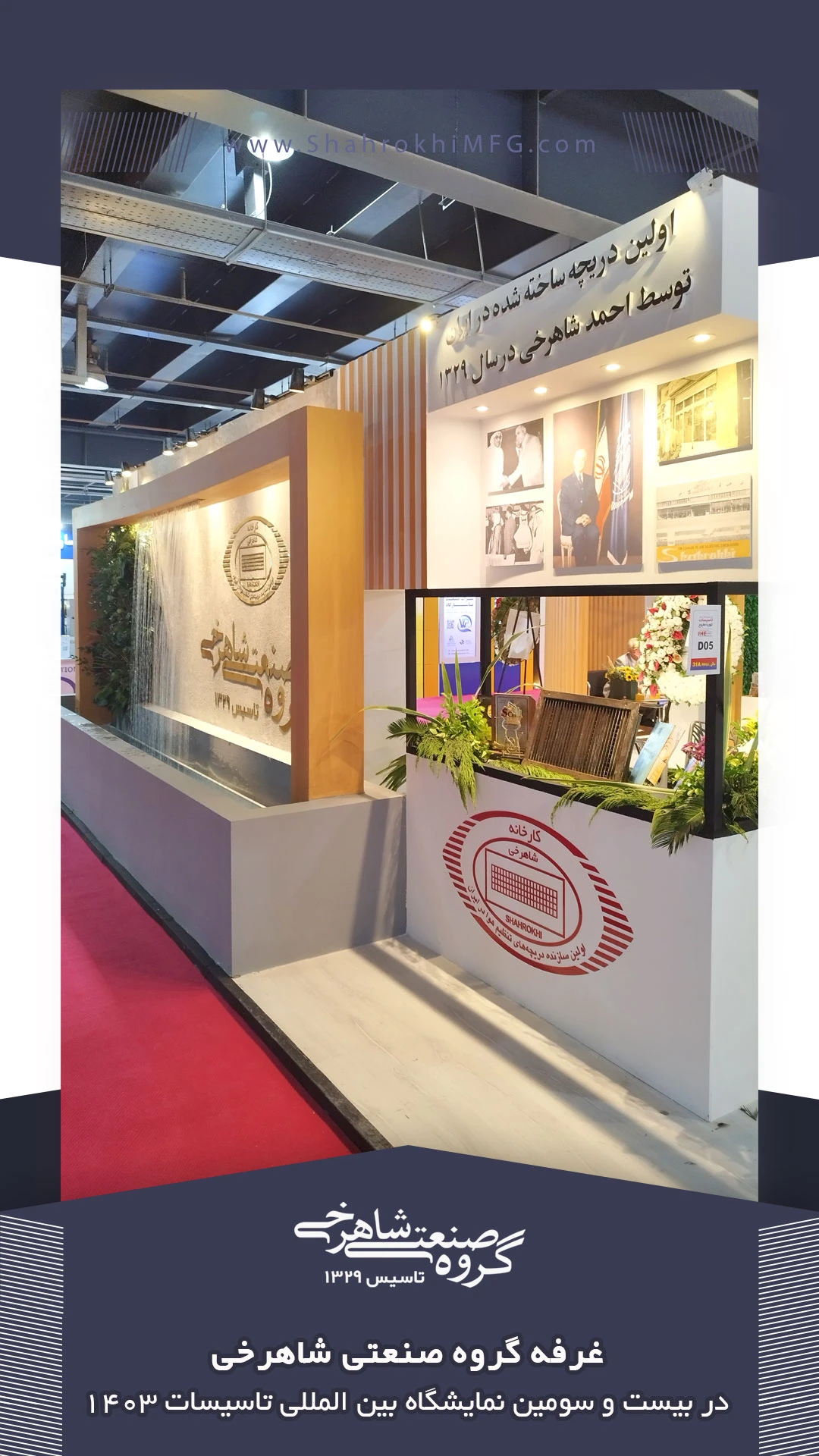
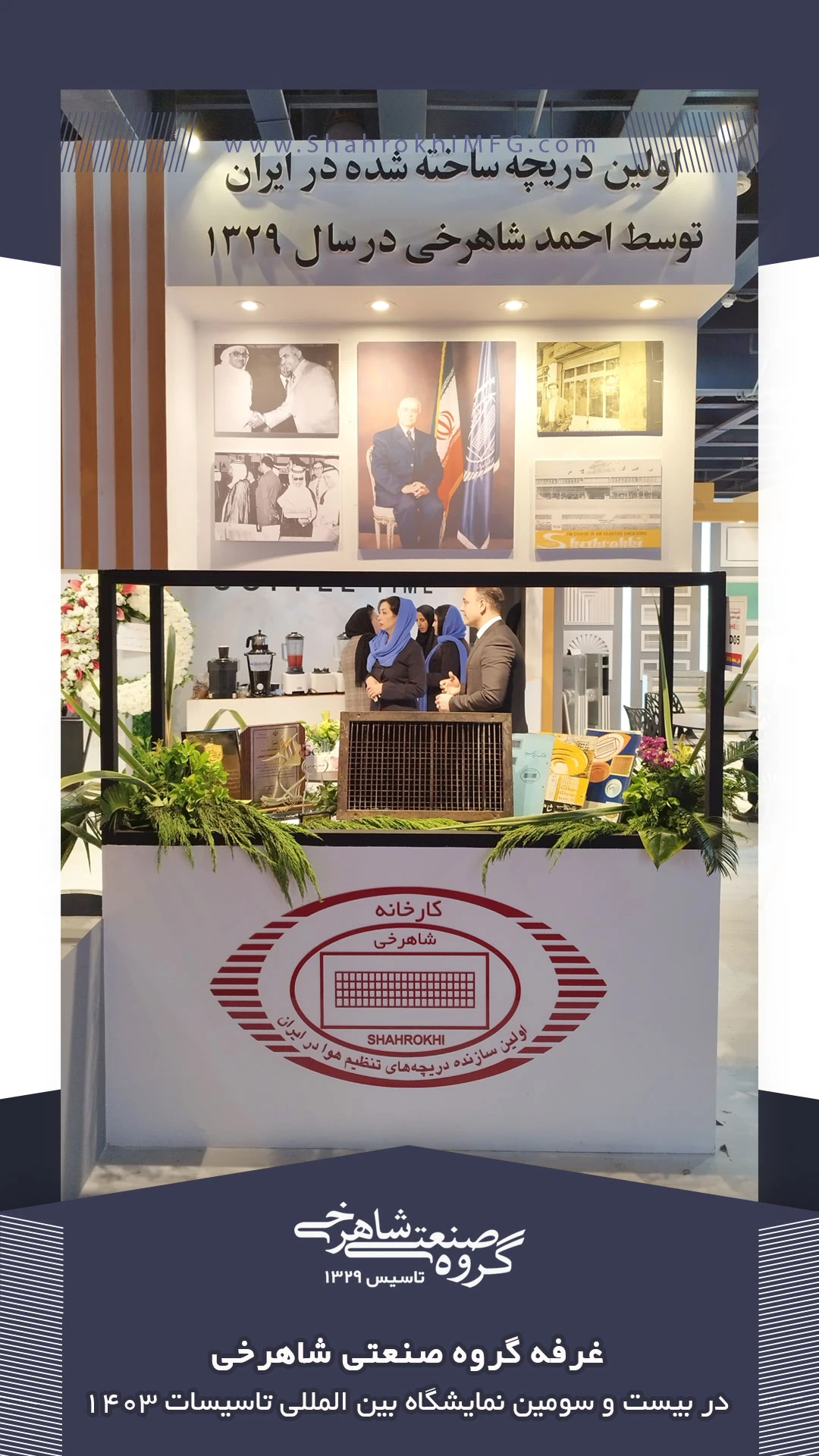
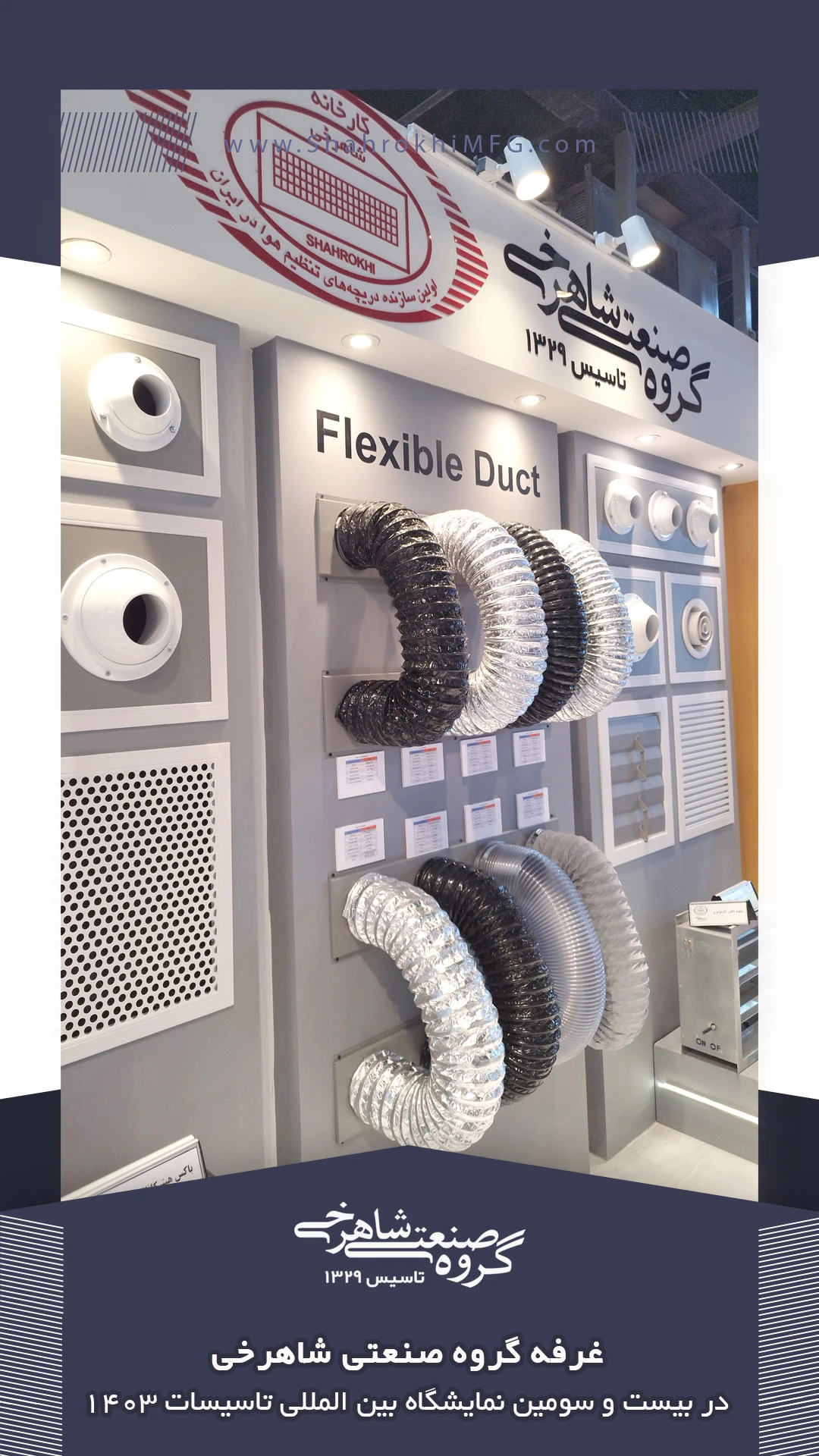
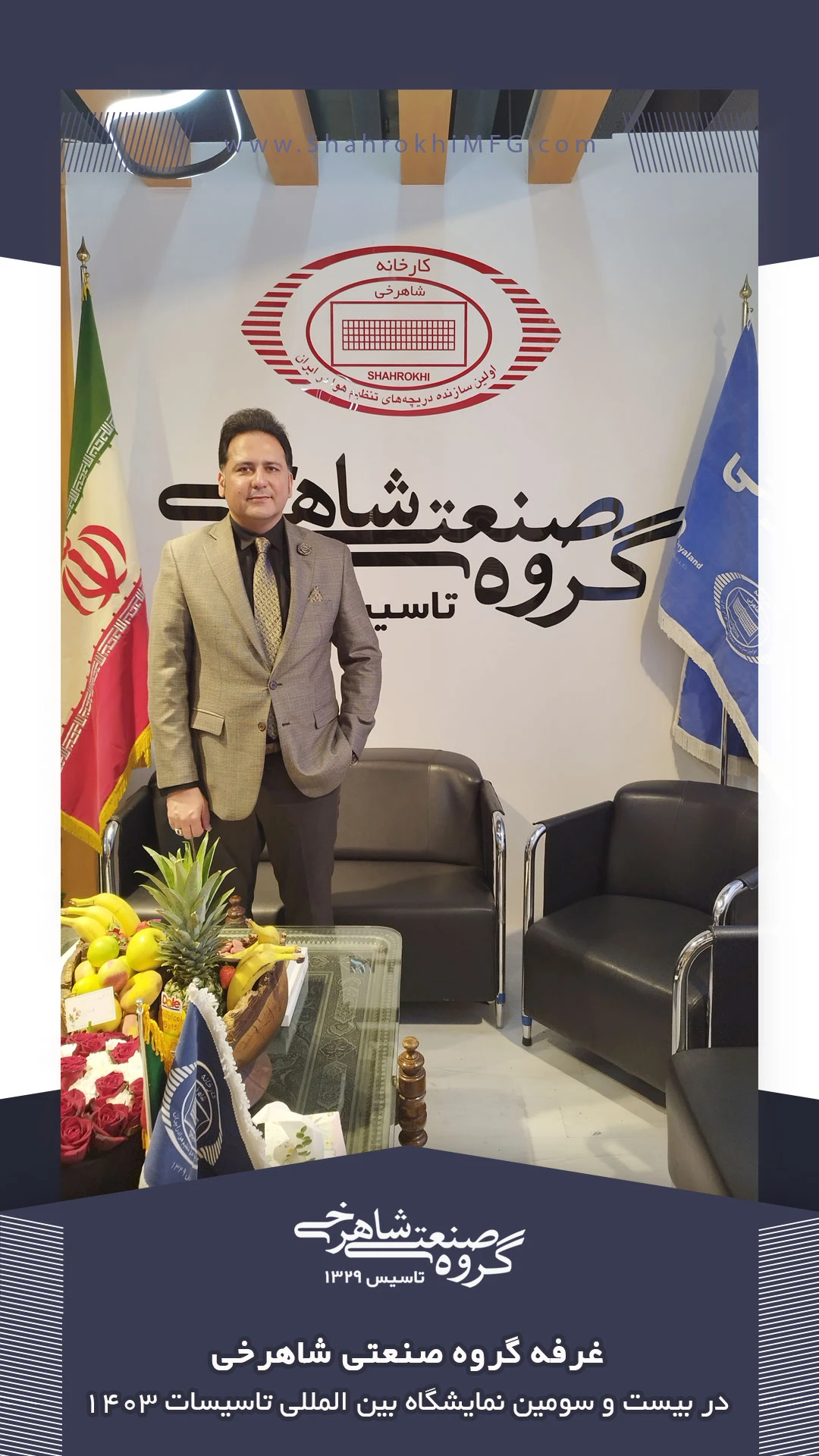
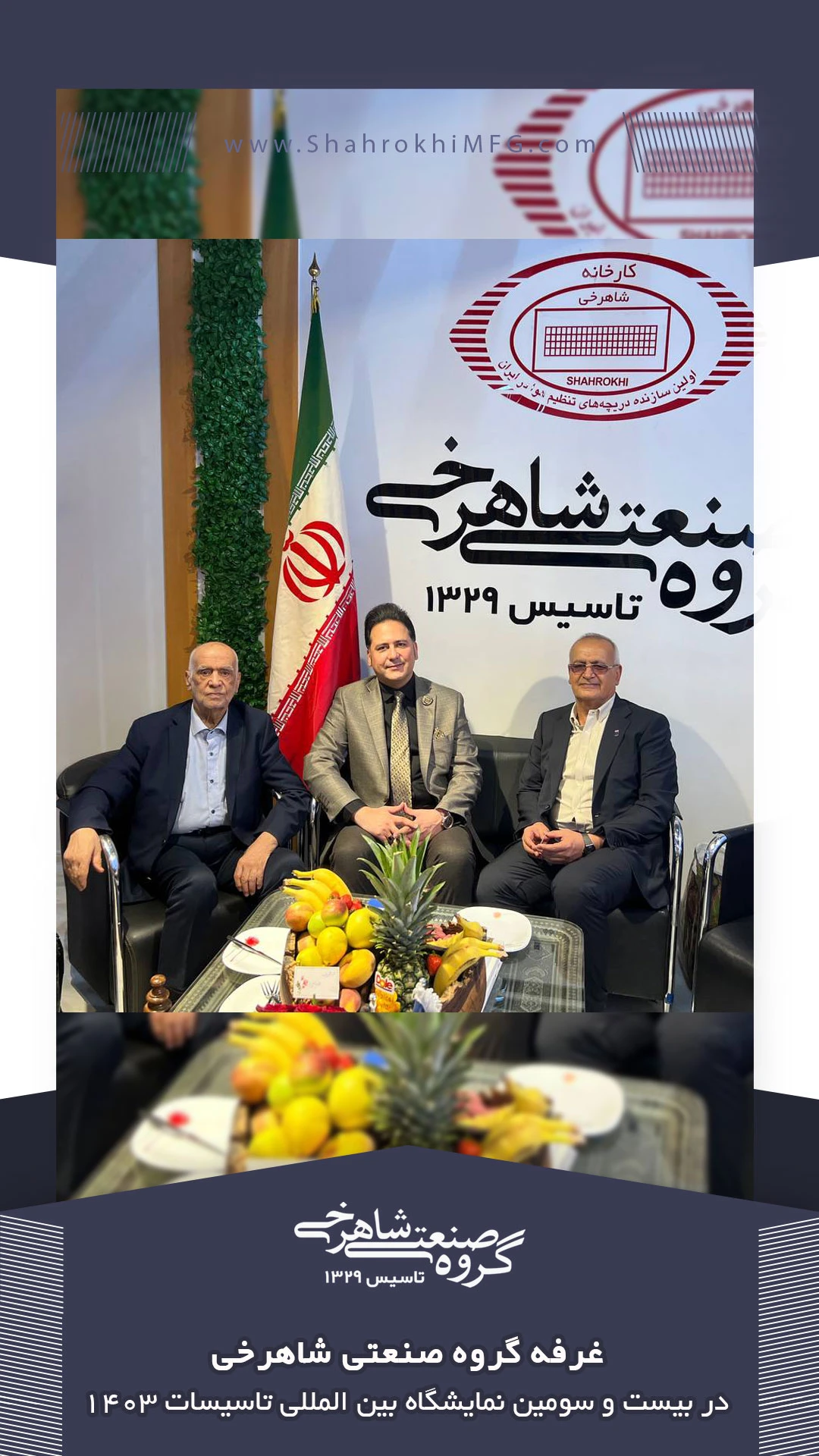
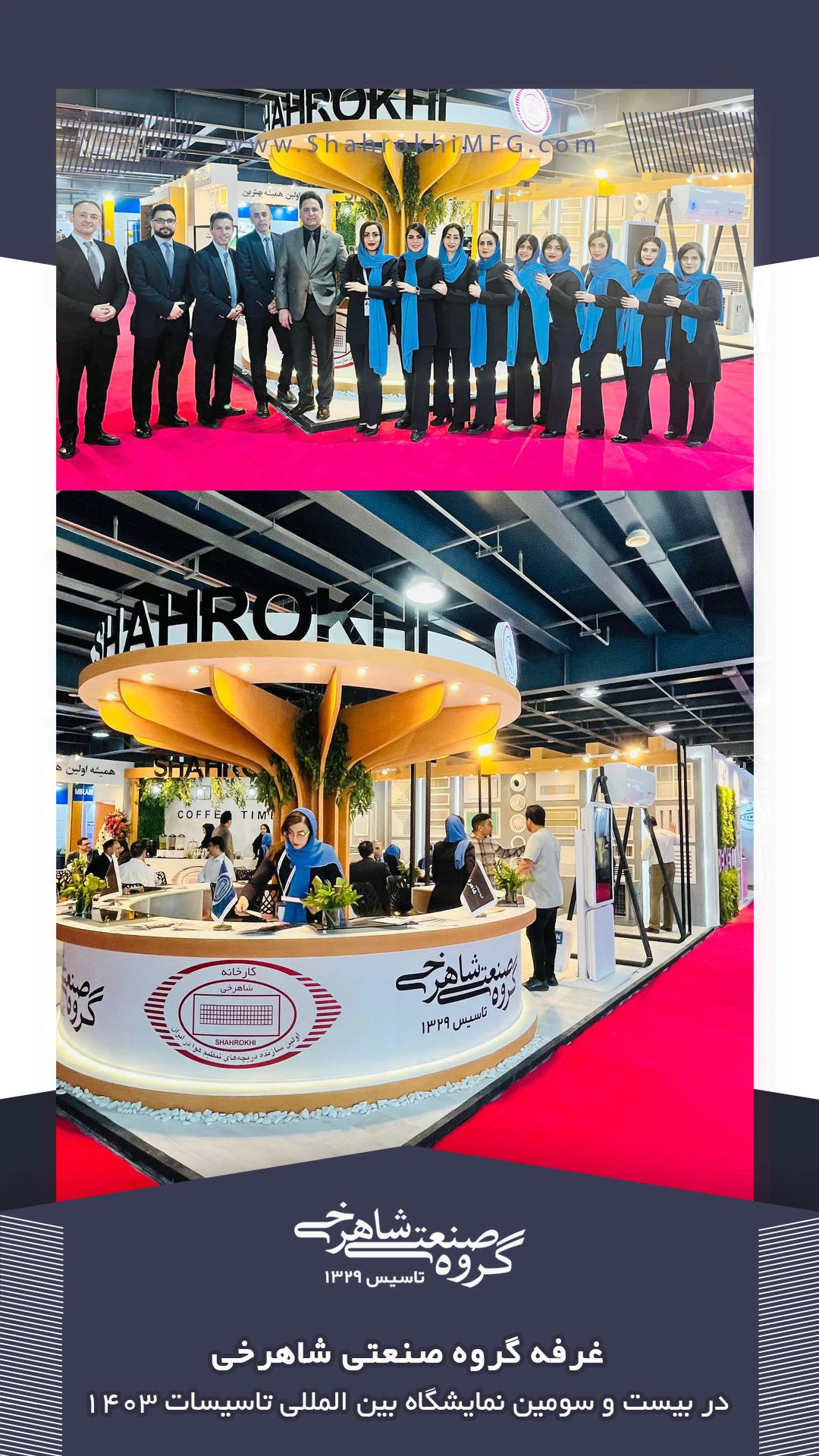
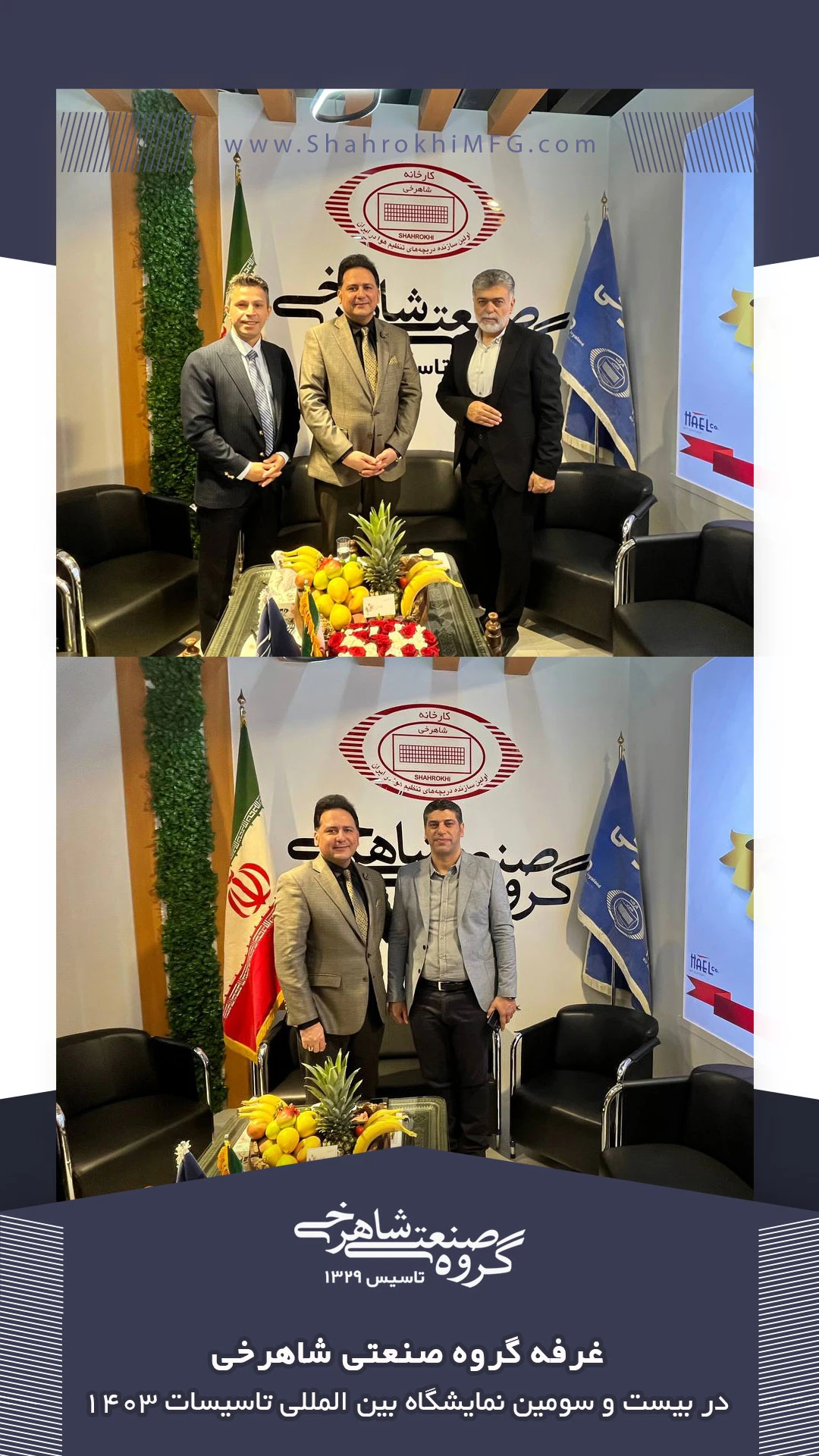
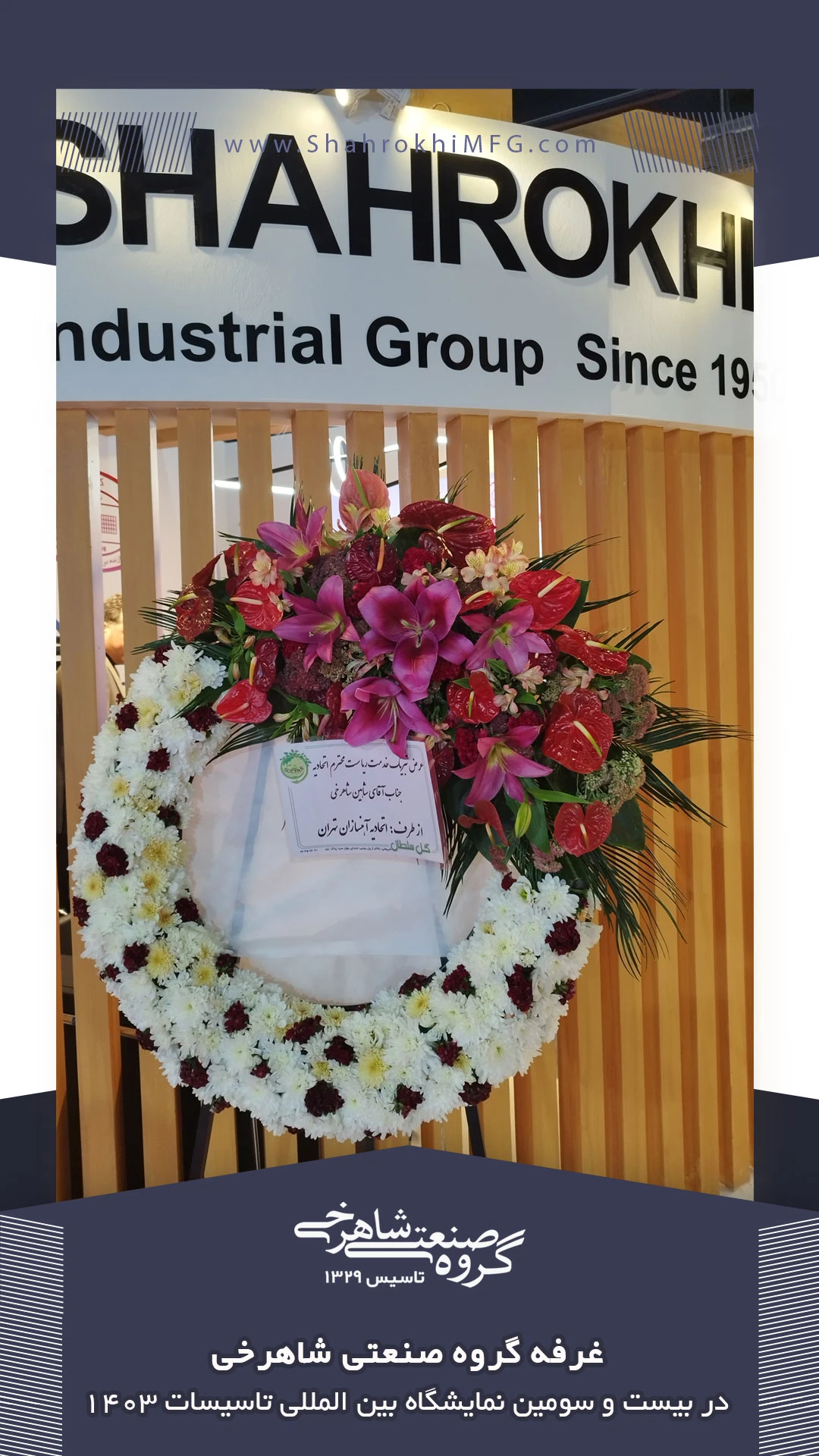
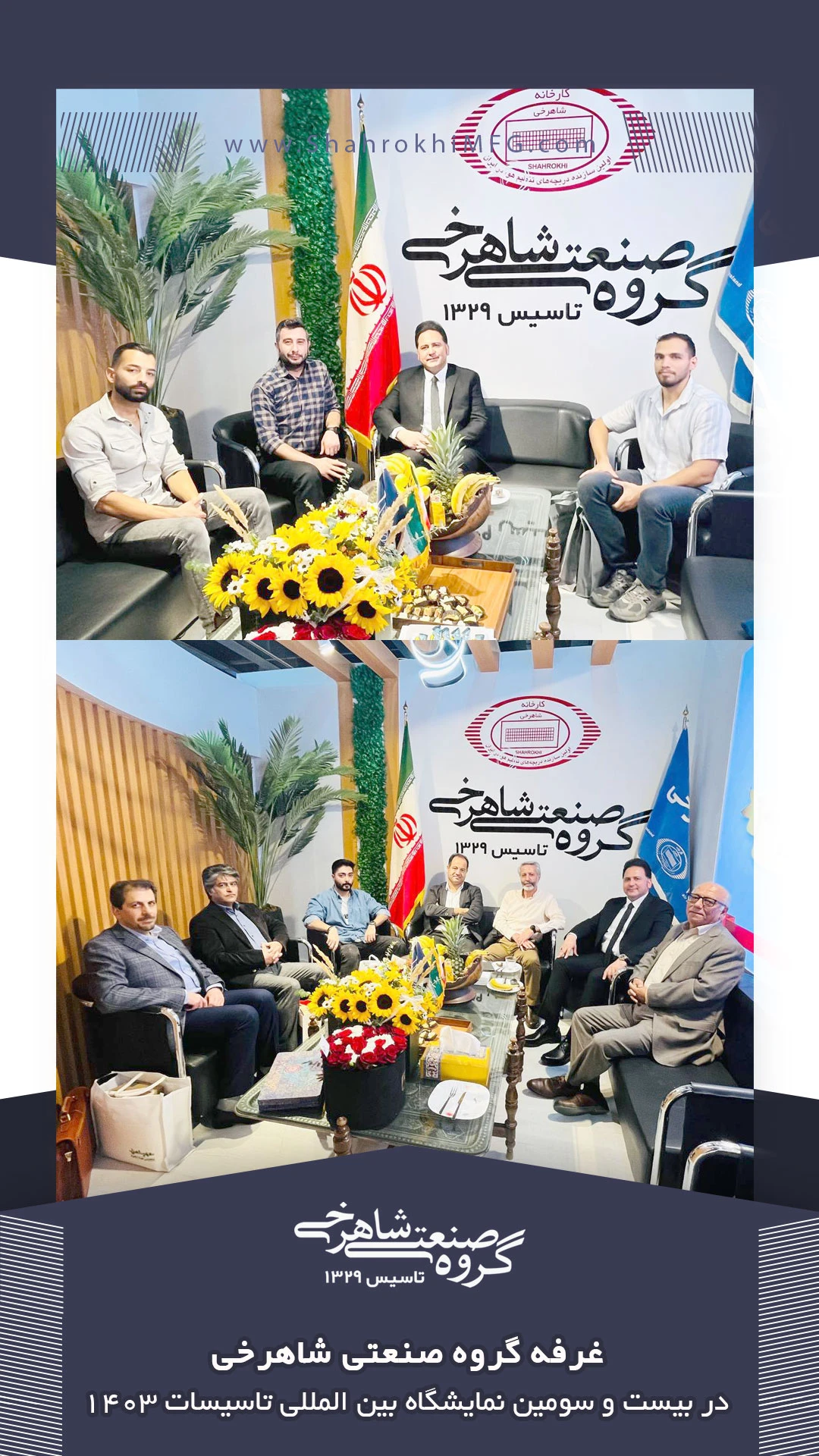
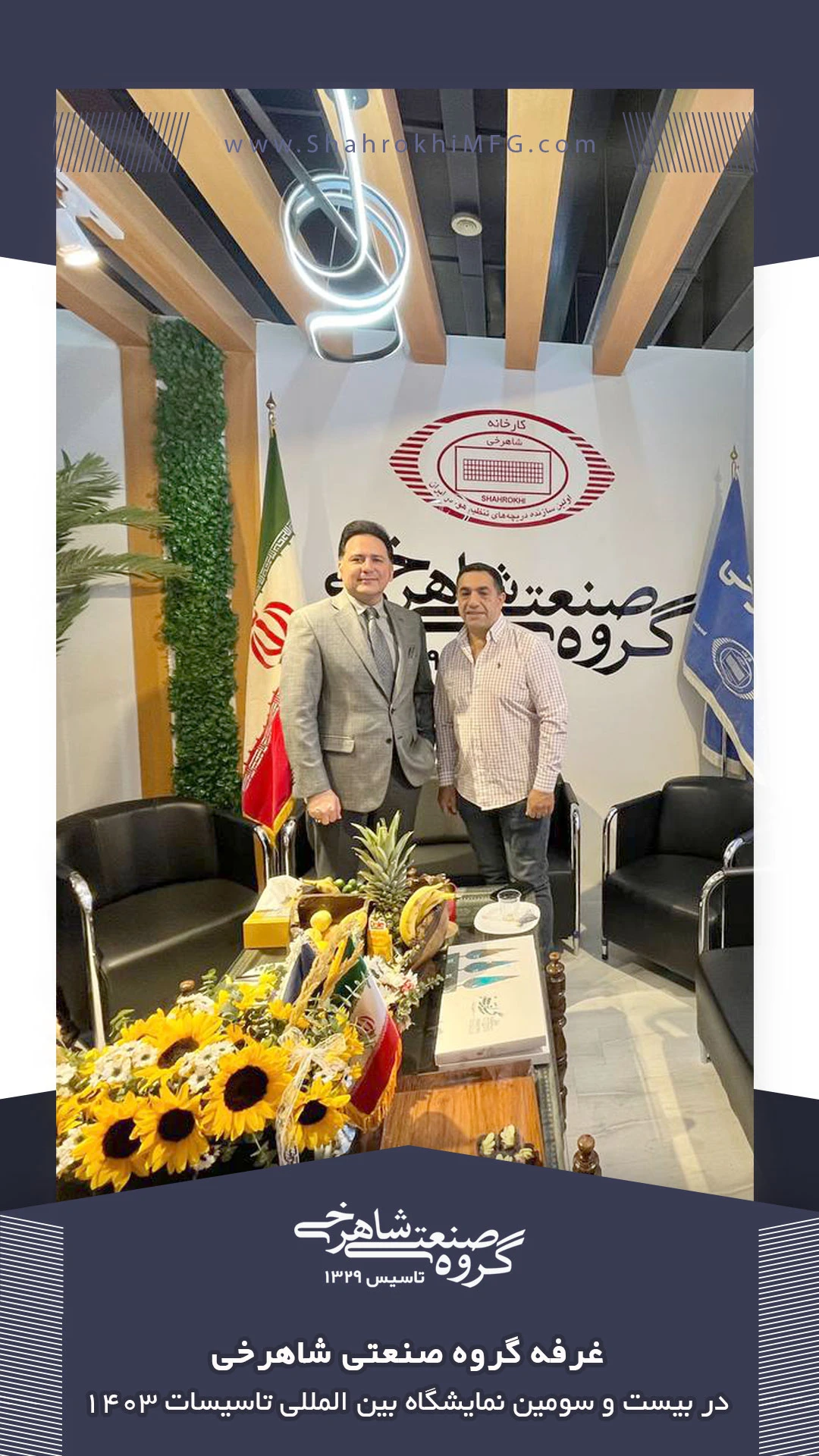
The presence of Shahrokhi Industrial Group in the 23rd International Facilities Exhibition 1403
Shahrokhi Industrial Group, as one of the leaders of the air conditioning industry in Iran, participates in prestigious domestic and international exhibitions every year. In 1403, this group participated in the 23rd International Exhibition of Air Conditioning Installations and Cooling and Heating Systems, which was held from 13th to 16th Mehr at Tehran International Exhibition.
Shahrokhi Industrial Group: A leader in the air conditioning industry
Shahrokhi Industrial Group is known as the first and largest industrial unit in the field of air conditioning equipment in Iran. This group has been able to offer quality products in the field of cooling and heating systems by using new technologies and a team of experts. The brilliant history of this group in the industry shows their commitment and continuous efforts to improve the quality and technological standards in this field.
Objectives of attending the exhibition
The presence of Shahrokhi Industrial Group in international exhibitions serves several important purposes:
Introducing new products: The group displays its latest products and technologies at each exhibition and allows visitors to get to know the innovations and improvements made closely.
Connecting with customers and business partners: Exhibitions provide a great opportunity to make new connections and strengthen relationships with existing customers and business partners.
Acquaintance with new trends in the industry: By attending exhibitions, Shahrokhi Industrial Group learns about the latest trends and technologies in the air conditioning industry and can apply the necessary updates to its products.
1403 facilities exhibition
This exhibition is held as one of the most prestigious events of the facilities industry in Iran, with the presence of large domestic and foreign companies. The 1403 Air Conditioning International Exhibition provides an opportunity to exchange experiences and technologies among industry players.
Achievements of Shahrokhi Industrial Group
The presence of Shahrokhi Industrial Group in this exhibition gave them the opportunity to attract the attention of visitors by presenting innovative and high-quality products.
It caused them to receive customer feedback. Interacting with visitors and getting their opinions about products helped Shahrokhi Group to improve the quality and design of its products.
The presence of Shahrokhi Industrial Group in the 23rd International Exhibition of Air Conditioning Installations and Cooling and Heating Systems 1403 shows the commitment of this group to upgrade the air conditioning industry in Iran and provide quality products to customers. Due to its brilliant history and continuous innovations, Shahrokhi Industrial Group, as one of the leaders of this industry, plays an important role in the development and advancement of air conditioning technologies.
https://shahrokhimfg.com/wp-content/uploads/2024/10/shahrokhi-tasisat-1403-en.webp800800alandhttps://shahrokhimfg.com/wp-content/uploads/2026/05/shahrokhi-logo-site.webpaland2024-10-18 02:23:042024-10-18 02:47:17Shahrokhi in the 1403 facilities exhibition
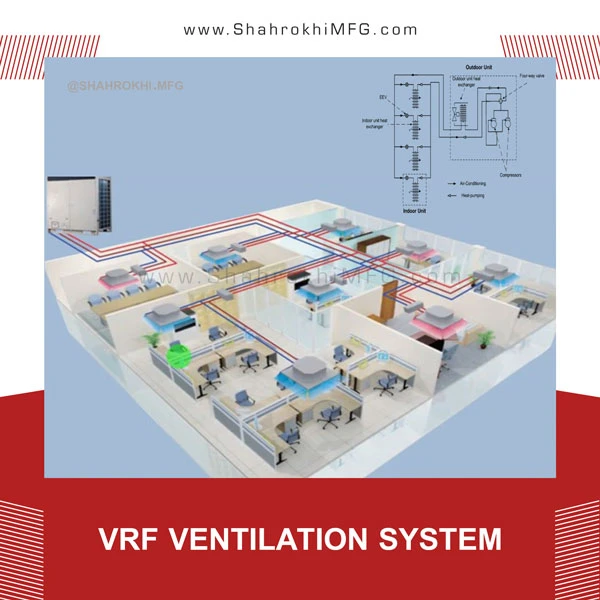
Variable Refrigerant Flow (VRF) is a type of air conditioning technology that was invented in 1982 in Daikin, Japan. A VRF system, like splits, uses refrigerant for cooling and heating. This refrigerant is circulated in a circuit by an external unit between several internal units.
VRF systems are an advanced generation of ductless multisplit systems and one of the most efficient modern air conditioning systems, allowing more indoor units to be connected to each outdoor unit. VRF systems allow simultaneous heating and cooling as well as heat recovery to reduce energy consumption. Providing heating and cooling by a fully integrated system, with a single control system, no need for an engine room and maintenance technician, as well as low power consumption and a high coefficient of performance (COP) of the device, are some of the key advantages of these types of systems.
Also, other advantages of this system include the possibility of piping in long distances, the possibility of installation in high projects, the possibility of installing different types of indoor units, the central controller, and the use of R410a refrigerant, which is environmentally friendly, and also the lack of water consumption.
Condensation refrigeration cycle
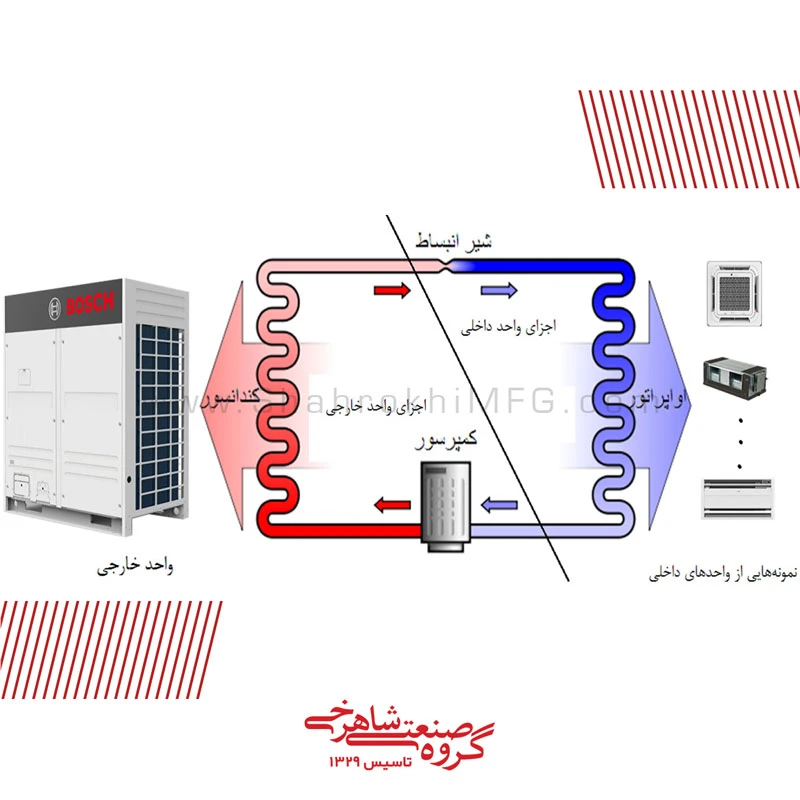
The compression refrigeration cycle consists of 4 parts: condenser, evaporator, pressure relief valve and compressor. The compressor increases the pressure; The condenser transfers heat at a constant pressure and condenses the super heat steam and sends the high-pressure liquid to the pressure relief valve, which reduces the pressure during the constant entropy process, and the evaporator also takes the heat from the environment at a constant pressure and cools the environment. The important thing about this cycle is that by reversing the position of the condenser and evaporator, it becomes a heating cycle, which is called a heat pump.
Showing the internal and external components of the VRF system in the refrigeration cycle
VRF variable refrigerant flow systems
Variable refrigerant flow systems are the same refrigeration cycle in which the refrigerant flow rate is changed by means of a variable speed compressor (inverter) in the outdoor unit and an electronic expansion valve (EEV) in the indoor unit to provide comfort conditions. This cycle is generally the same as the condensation refrigeration cycle, but it has a series of minor differences as follows:
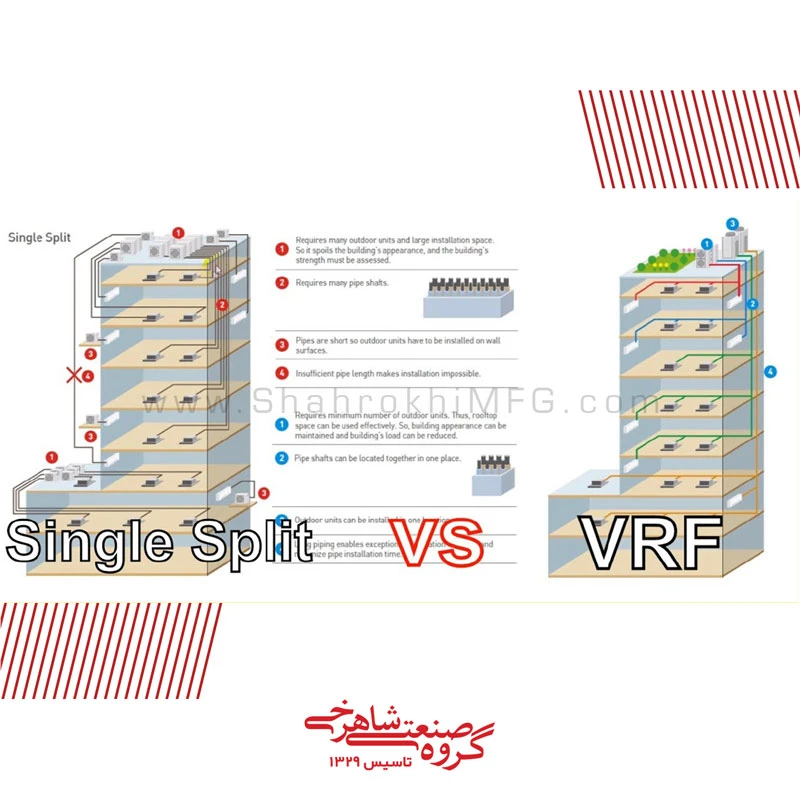
In air conditioners, the internal unit only includes the evaporator, but the external unit includes a compressor, condenser and pressure relief valve, which makes it possible to have only 10 to 15 meters of piping between the internal and external units because the pressure drop process in the expansion valve and in The external unit occurs and a significant drop in capacity occurs as the piping becomes longer, and their compressor does not have enough capacity for this.
Comparison of VRF and single-spilt systems in a multi-story building
But in the VRF system, the internal unit includes the evaporator and pressure relief valve, and the external unit includes the condenser and compressor. This small change makes it possible to pipe up to 1 km in these systems, and we can have a pipe height of up to 110 meters, and the efficiency increases. Also, with the ability to connect 64 internal panels to each external unit, we can use them in high-rise buildings.
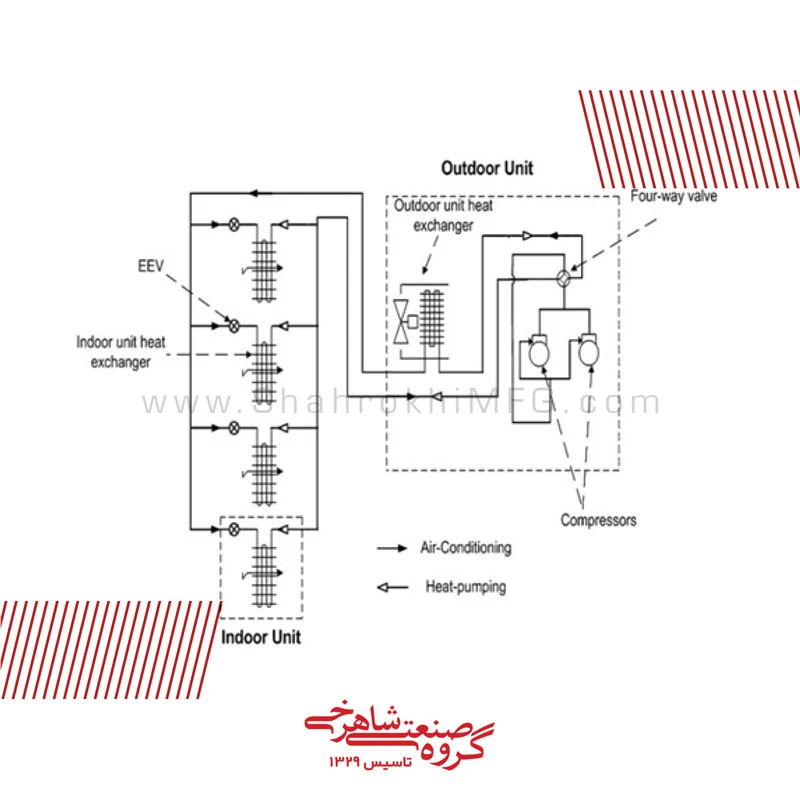
In these systems, the change of use from the heating system to the cooling system is done through a 4-way valve as shown in the figure below.
4-way valve performance and changing VRF system performance
This figure includes an external unit with two compressors and 4 internal units, in the cooling mode (solid arrows), the refrigerant is compressed in the compressor and is directed to the condenser (converter of the external unit) through the 4-way valve, and then enters the internal unit and There, it passes through the electronic expansion valve and enters the evaporator (converter of the indoor unit) and takes heat from the environment; But in the heating mode (empty arrows), after being compressed in the compressors, the 4-way valve enters the refrigerant into the internal unit, where it first enters the condenser (converter of the internal unit) and gives heat to the environment, then it expands in the expansion valve and The external unit enters and takes heat from the outside environment in the evaporator (converter of the external unit).
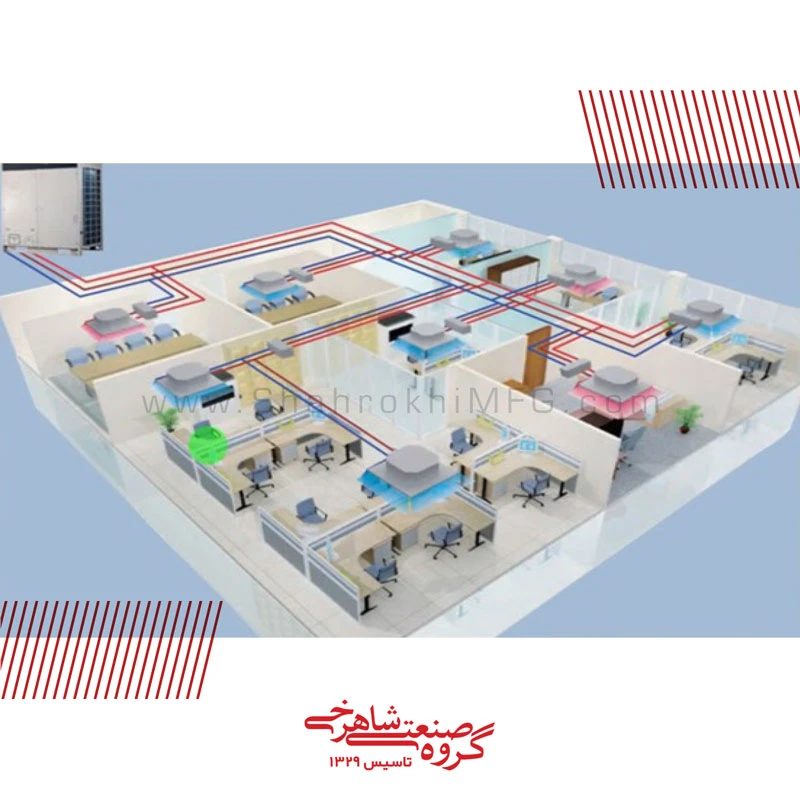
These systems also have a special feature in addition to cooling and heating which is the feature of all compression refrigeration cycles, which is the ability to simultaneously cool and heat in different spaces by means of a compressor. This feature is very useful for places like hospitals or places that have data centers and can provide up to 2 times the efficiency for the same capacity.
Simultaneous heating and cooling by a VRF unit in different zones of a building
This is done in such a way that part of the refrigerant after condensing in the compressor in the outdoor unit does not enter the condenser of this unit and instead of entering the condenser of the outdoor unit, it enters the indoor environment and in the indoor unit, the place that needs heating. It is entering the evaporator without passing through the expansion valve. In this case, the evaporator acts like a condenser, and the refrigerant comes out as a dense liquid and enters the internal units that are responsible for cooling through the pipes along with another part that was condensed in the condenser of the external unit.
The various components of these systems include:
External unit with a capacity between 7 and 26 kW as a front panel, from 25 to 50 kW as a single panel and from 50 to 200 kW as several external units that are modularized together. The internal components of this unit are as follows:
External unit components
Compressors
Fan (axial)
Coils (condenser)
Electronic board
Inlet and outlet valves
Accumulators (as a reserve source, in which the refrigerant is stored if necessary, and they also regulate the entry of gas into the compressor.)
Sensors
Oil separators
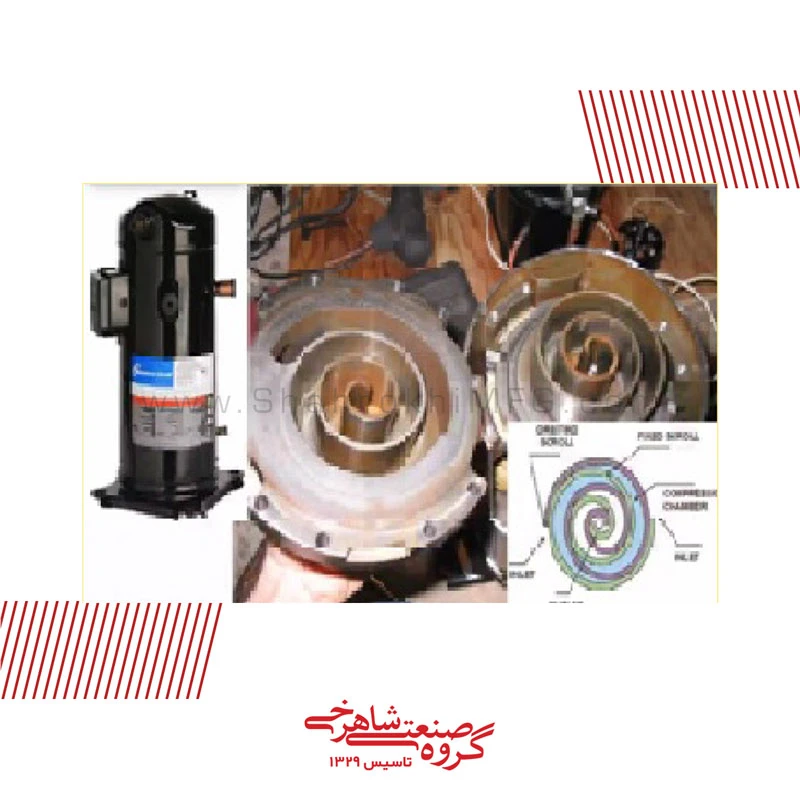
* The compressor of these systems is generally scroll and hermetic or semi-hermetic, which is almost unrepairable.
Internal and external view of scroll compressor
Indoor unit components
Fan
Expansion valve (after the inlet pipes)
Coil (in the inlet pipe, which is generally smaller in diameter, the refrigerant enters as a liquid or a combination of liquid and gas, and after passing through the expansion valve, it leaves the outlet pipe (gas pipe) as a gas. The gas pipe is usually larger and if It’s cool to the touch.)
Copper pipes
In VRF systems, these pipes are the interface between indoor and outdoor units and all components in general. The important thing about branches is that there are branches that are responsible for the proper distribution of refrigerant, and if proper branches are not used, the distribution of refrigerant will not be proper and we will not have proper heating and cooling, or even a part of the system will be disturbed.
https://shahrokhimfg.com/wp-content/uploads/2024/03/VRF-ventilation-system-en.webp600600alandhttps://shahrokhimfg.com/wp-content/uploads/2026/05/shahrokhi-logo-site.webpaland2024-03-08 02:07:512024-03-08 02:34:17VRF ventilation system
In the air conditioning ducts, generally, due to the operation of the fan, whether axial fans or centrifugal fans, an unpleasant sound is dispersed in the environment. The intensity of this noise varies depending on factors such as the type of fan, the distance of the fan from the location, the type and type of channels and branches, the type of surrounding walls and other such factors, but in any case, the presence of this noise will create a disturbing environment for the residents.
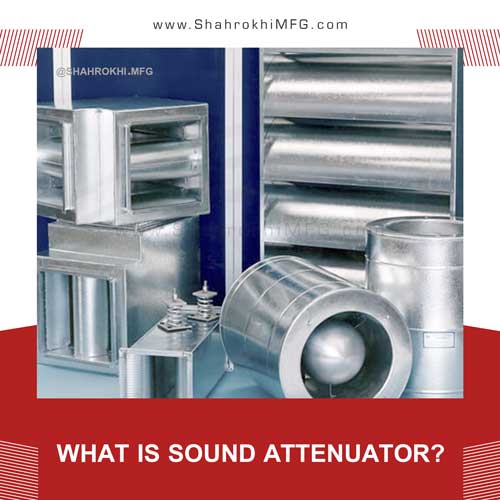
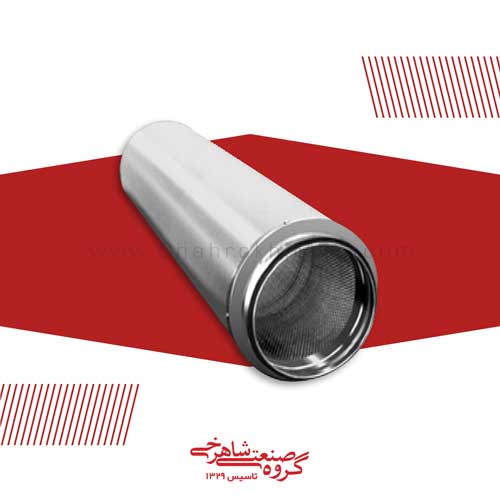
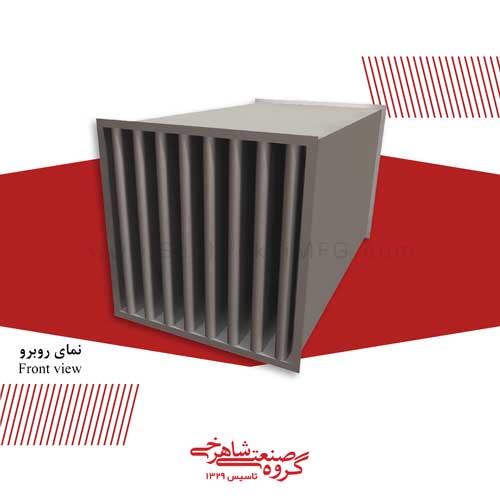
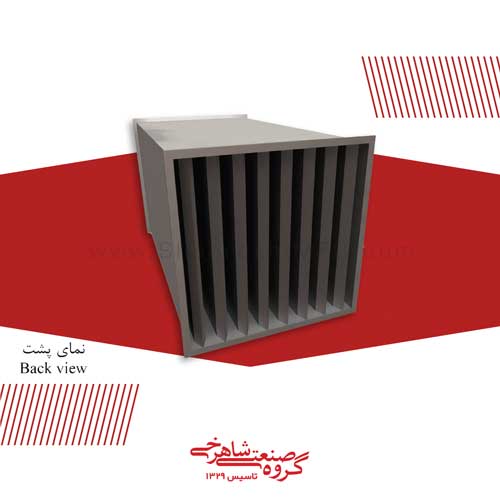
Nowadays, channel Sound Attenuator are used to solve this problem. With their special design, these Sound Attenuators, in addition to having the least impact on ventilation air flow, eliminate the sound produced by air conditioners to a great extent.
Silencers are widely used in industries such as metallurgy, electricity and power, mining and subway tunnels, and interior architecture in order to reduce HVAC system noise. The type and design of Sound Attenuator is such that it absorbs the noise produced with all kinds of frequencies and in the range of human hearing (from 63 Hz to 8000 Hz) it provides comfortable environmental conditions in terms of sound.
In this regard, the design of a suitable silencer that can provide these conditions in the environment is of special importance in such a way that in the case of improper design, the silencer will be able to absorb sound and as the cause of sound, it will double the problems. The basis of sound absorption in sound absorbers is based on the absorption of waves in porous materials.
Porous absorbent material
Sound absorbent materials absorb most of the sound energy and reflect a small amount of it. Therefore, the use of these materials is very useful to control the amount of noise, and they are used in various places such as points close to sources of noise production (such as fans in air conditioning systems) and inside air transmission channels.
There is a wide range of these materials that provide a variety of absorption properties based on sound frequency, composition type, thickness, outer surface, and installation method. Meanwhile, materials with high sound absorption coefficients are usually porous. A porous absorbent material is a solid that contains holes, channels, or slits that sound waves are able to enter.
Stone wool is among the family of thermal insulators consisting of mineral fibers. This insulation is a very desirable sound insulation due to the absence of sound transmission among the components and sound absorption, therefore, it is installed in airports, sound recording studios, under rails and in metro stations in cities. Increasing the thickness and creating a suitable air gap behind the insulation increases the amount of sound energy attenuation.
The geometry of Sound Attenuators
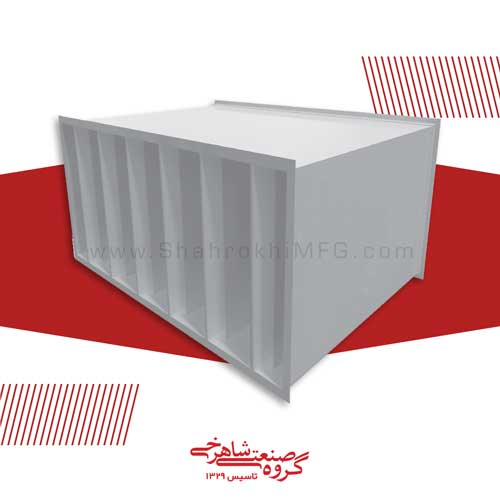
The structure of Sound Attenuators includes perforated sheets, where porous materials are placed between the two sheets depending on the place of use. Sound absorbers that are used in most cases today are in the form of vertical blades with specific length and width. Blades placed next to each other with equal distances in the ventilation channels.
Therefore, the passing air flow passing through these blades by means of two surfaces and the sound absorbing properties of the porous materials in the body of the blade, lose their accompanying sound to a certain extent. These Sound Attenuators have advantages, among which one can mention stability against air flow and wind speed, as well as the ability to replace damaged modules.
The conditions of the human environment have a direct effect on his mental states, physical condition, the way he does work and in general all aspects of his life. Since the majority of human life today is spent inside the building, creating favorable environmental conditions in the building, whether it is a workplace or a home, etc., is very important, the most important part of which is air conditioning for the residents of the building according to their type of activity.
The most beautiful and expensive buildings will not be habitable if they do not have proper air conditioning system.
Controlling temperature, humidity and air speed, removing dust and other air pollution, and if necessary, eliminating microbes and bacteria suspended in the air, heating and cooling the air according to the season, are the main tasks of an air conditioning system, and other Duties are next in importance.
Air conditioning (cooling – heating)
Systems and applications
Choosing the right type of air conditioning system for a particular space or building is a very sensitive decision.
The main issues that should be considered by the designer of the air conditioning system are:
1- Personal financial facilities or investor organization
2- Space or building (purpose, location)
3- Exterior characteristics of the building, temperature, humidity, wind, radiation, sun, shade
4- Changes in heat load inside the building (residents, lights)
5- The ability of the building to store the acquired heat
6- Necessity and capacity of pre-cooling to reduce the size of air conditioners or partial cooling of the building
7- The physical aspects of the space or building in terms of adapting to the air conditioning system of the equipment and adjusting the system performance, under partial heat load
8- The expectations of the employer’s personal statements about the quality of the ambient air
Applications of air conditioning
Although in theory any air conditioning system can be used for any building, but in practice due to the existence of factors such as investment and operation costs, space and location limitations, the architectural plan of the local building location and the evaluation and experience of the designer’s engineering. The number of suitable air conditioning systems for each building will be limited. Usually, in buildings whose heating and ventilation systems are simple and of adequate capacity, operation and maintenance costs will be relatively low.
Air conditioning applications are usually in public and commercial buildings (office buildings, libraries, transportation centers), assembly buildings (amphitheaters, studios), educational buildings (kindergartens, universities, schools), residential buildings (dormitories, hotels), residential buildings (single-unit, multi-unit, apartment), health and treatment centers (hospitals), etc., which we deal with the type of systems in residential buildings.
The type of air conditioning systems of residential buildings is affected by local and practical factors.
Available sources of energy and their price, weather conditions, social and economic characteristics and access to expert staff for installation and repairs are local factors and the type of building, technical characteristics of the building and regulations and standards of residential buildings are practical factors.
Therefore, various systems can be used for heating, cooling, humidification, humidification and air purification or combining these processes. Usually, residential buildings need cooling and heating; In many systems, they also perform air purification by adding conventional or electrostatic filters. In many systems, women’s humidity can also be used; Especially in the heating season and when it is necessary to increase the air humidity according to the psychometric conditions.
Common heating systems
Common heating systems for residential buildings consist of three main groups:
Forced air supply from the central station (central forced air), central water systems (Central hydronic) and regional systems (zonal) that select and design the system according to the type of energy source, how to distribute and transfer the medium of cooling and heating, terminal or consumer devices.
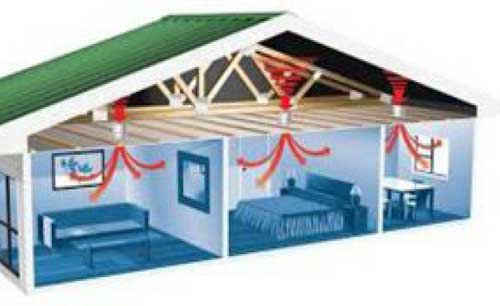
An incinerator consists of a two-piece air conditioning unit, humidity and air. The way the system works is that the air returns to the device through the return air channel, and in winter, the air circulation fan, which is a part of the furnace, feeds the heat to the desired space.
A humidifier adds the required moisture to the warm air that is distributed inside the building through ducts. During the cooling season, as the circulating air passes over the evaporator coil, heat and moisture are removed from the air and are the refrigerant pipe located outside is connected.
The moisture distilled on the surface of the evaporator coil is discharged through the discharge tube. Cooling and heating equipment in houses that are built as single-unit complexes or multi-story apartments are usually similar to single-unit buildings. Using a separate system for each unit allows each unit to be controlled independently. The amount of energy consumed by each unit can be measured.
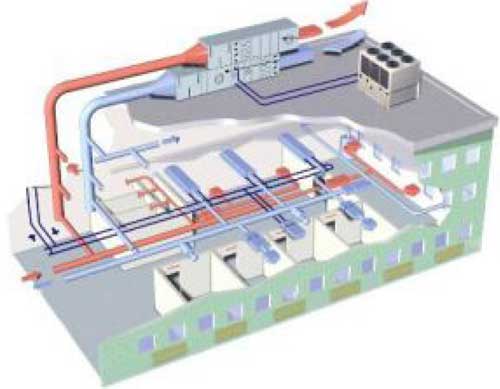
Central system with forced air flow
In high-rise multi-unit buildings, the cooling equipment used in single-unit buildings can also be used. These equipment can be installed inside the equipment room of any apartment or in the space under the stairs or above the false ceiling or warehouse. Small hot air furnaces suitable for residential buildings can also be used, but the necessary provisions must be made to supply combustion air and discharge combustion products to Action will come.
Central system with forced air flow
For evacuation, several chimneys or a manifold type vent system can be used, although local regulations should be considered in this case.
Another method that can be used for multi-unit buildings is the combined water heating/space heating system, in which the water in the hot water storage tank is used for space heating. In this system, water from the storage tank to the coil; The water in the air feeding device circulates.
To cool these spaces, you can use a split system air conditioner whose evaporator is inside the air handler.
At this stage, the designer should think about the best ways to save energy in buildings, the steps and solutions for which are given in the winter magazine.