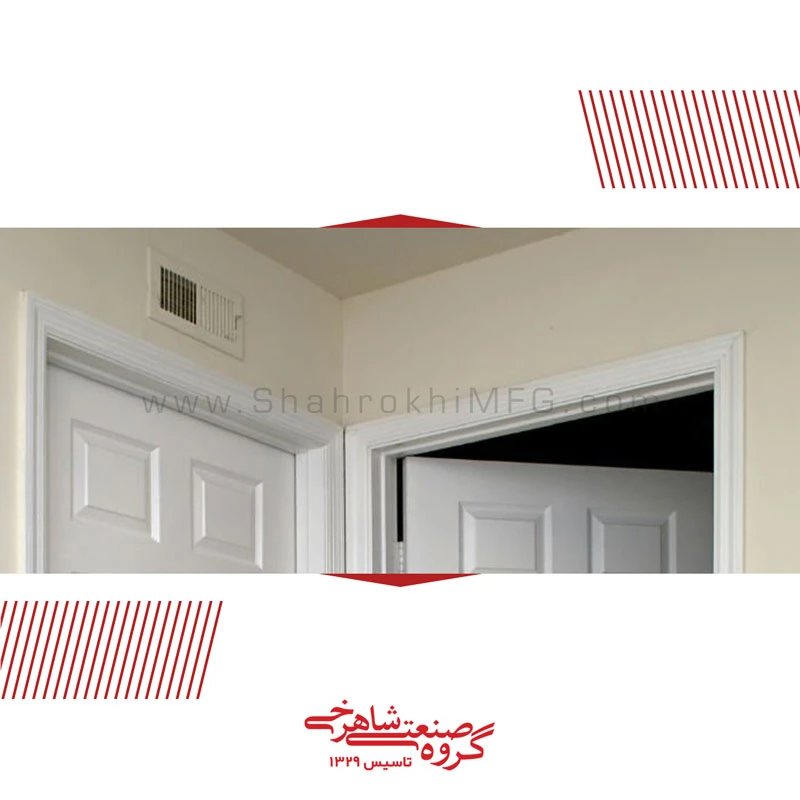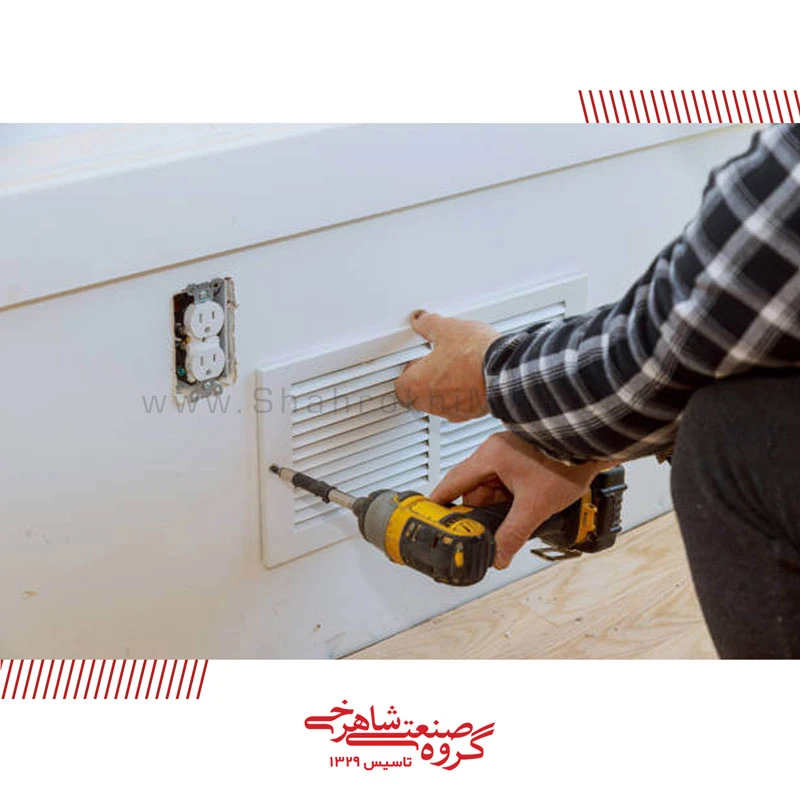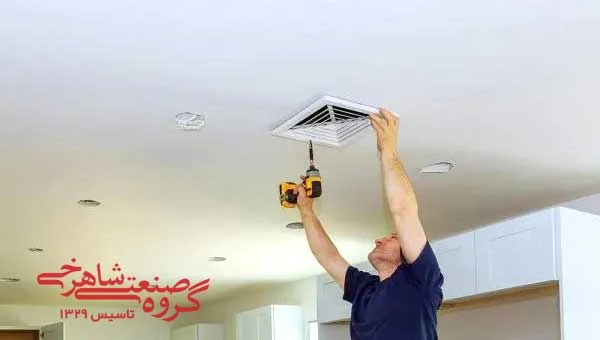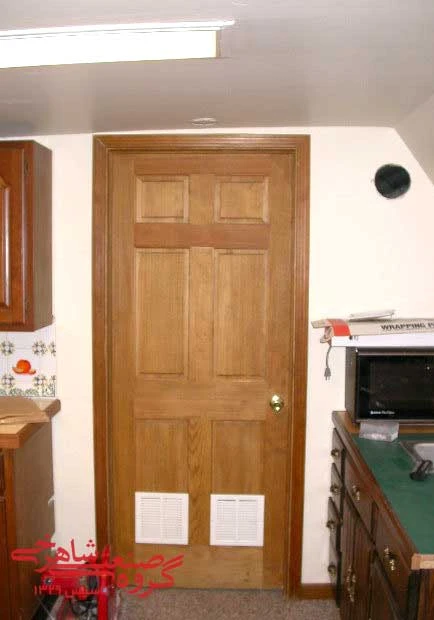
air register

Tag Archive for: air register

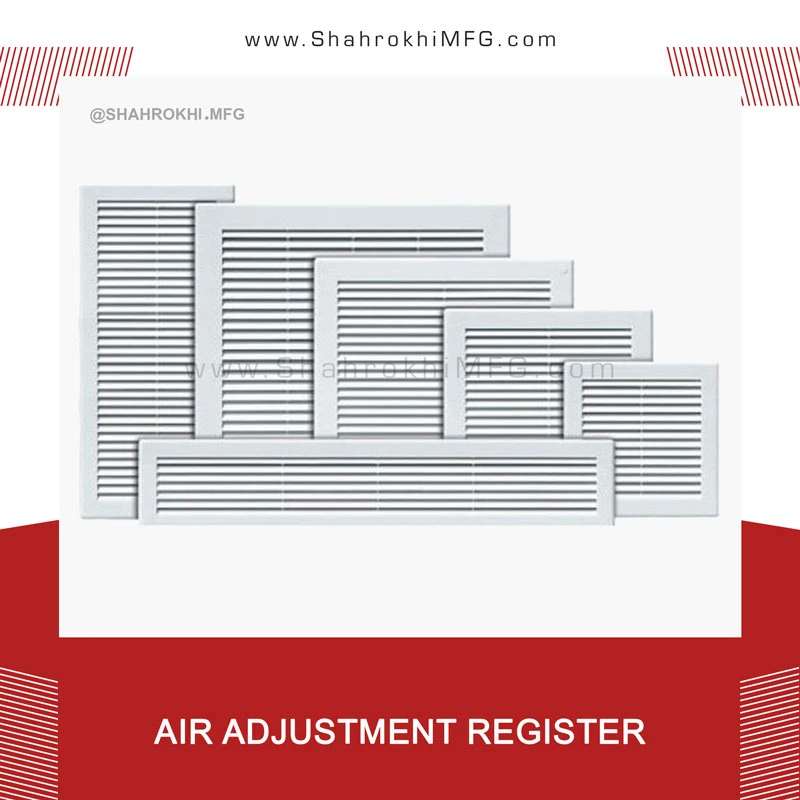
Air adjustment register

Air adjustment register – air transfer register

Air adjustment register

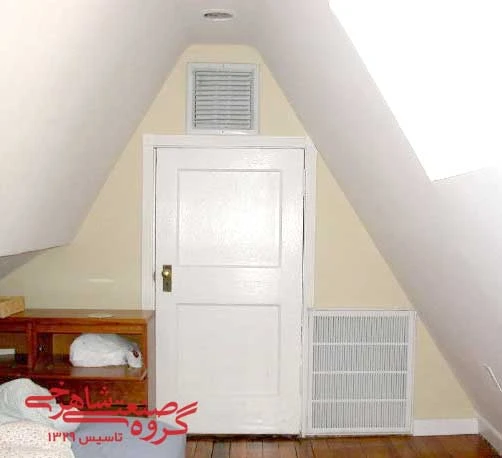
Before we talk about the types of air registers, we need to know what exactly this product is. Air vents are a hole in the wall covering the roof of your building. This cover should fit the dimensions of the hole. register prevent most things from entering inside.

At the same time, they provide the possibility of air circulation inside the room for heating or cooling purposes. Some air vents have additional functions. This type of register has a damper that can be moved to direct the air to a point in the room or even prevent the air from entering.


Definition of air control register

To adjust the air intake from the air channel, the air adjustment register is used. The air regulating register is made of different types of aluminum and iron. The air adjustment register consists of different vanes to determine the air path and the main frame, which divides the air outlet type of the register into one-way, two-way, three-way and four-way types.

Wall outlet air adjustment register:

This type of air adjustment register is installed at the outlet of the air ducts. This type of register has horizontal and vertical movable blades. By adjusting the blades, you can adjust the amount of air flow and the blowing path of the air entering the space. Normally, the direction of air flow in the wall register is downward in summer and upward in winter.

The installation location of the outlet air adjustment register should be such that a suitable air velocity is created at a height of about one to two meters from the floor of the room. If there is an obstacle in front of the outlet air adjustment register, it is better to place the air transfer register far enough away from the ceiling to minimize the effect of the obstruction.
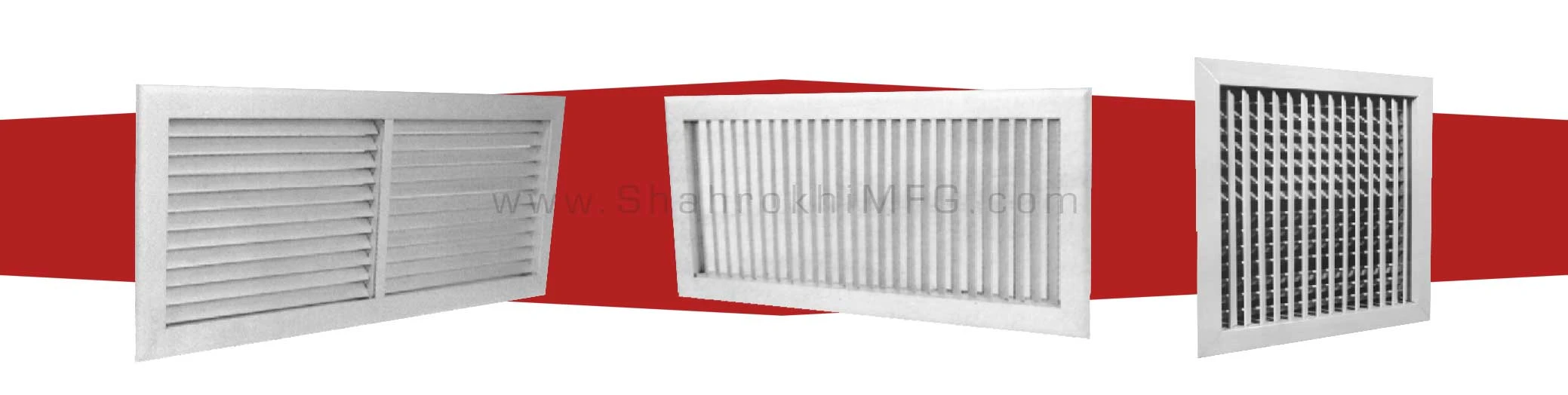
 

دریچه دیواری یکطرفه ثابت و متحرک

Ceiling air adjustment register

Gird diffuser ceiling air adjustment register is generally used to distribute air inconspicuously in various environments such as coffee shops, restaurants, sports, commercial, factories, warehouses and office, medical and residential environments.

Ceiling vents are installed in the ceiling in order to distribute the air evenly. Due to the different distribution of air and different throw length in constant flow, these types of registers are produced in two types, flat and prominent.
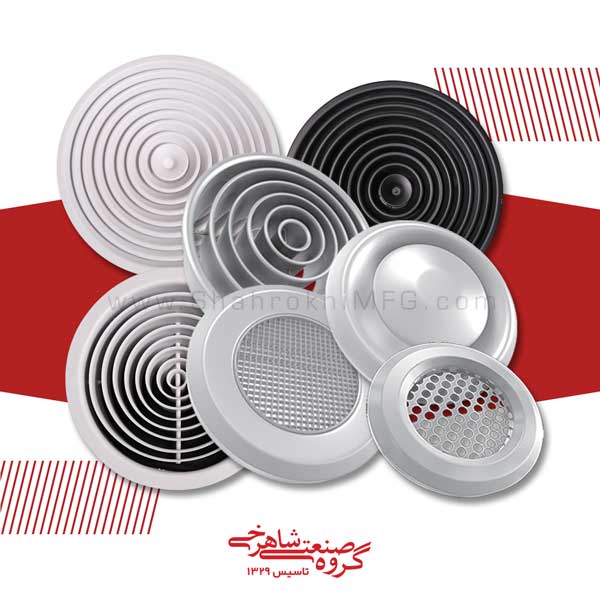
 

دریچه های سقفی گرد

Wall return air adjustment register

The wall return air adjustment register is installed at the beginning of the return channel, and the blades and vanes of this register are fixed and installed in such a way as to create the least pressure drop in front of the air entering the channel. This type of register usually has larger dimensions than air vents.

Difference between supply air and return air

There are two types of air registers that differ from each other in terms of function. The difference between the air supply register and the air return register can be seen from their names. A supply air register brings air into a room, while a return air register allows air to return to the ventilation system. In most modern homes, at least one air vent is installed in most rooms; But there is no need to do this and it is only necessary to install a number of larger registers in suitable places throughout the house.

Are air vents necessary?

As mentioned above, the presence of an air transfer register is necessary in every house. First of all, it should be stated that they protect your ventilation system against large-sized contaminants. Second, these products increase the efficiency of your heating and cooling system and thus reduce your costs.

What types of metals are used in the manufacture of air registers?

The most common types of metal used in making air registers are cast iron, aluminum, brass and steel. Registers made of these metals are highly resistant to rust. Therefore, they are the best choice for areas with high humidity such as bathrooms. In addition, the metals used in the production of air registers are divided into two different types.

The first group is metal sheets. Among the features of these sheets can be mentioned the thickness and light weight and easy laser cutting. Casting metals form the second group, which have high thickness and high price; But cast metals make it possible to make an air register with dimensions that cannot be obtained from sheet metal. Due to the strength and durability of cast metals, the registers made of them are suitable for installation on the floor of the building. The only catch is that they usually cost more and have more limited models.

Advantages of using metal for air vents

  • Strength against impact or pressure caused by walking or moving furniture when used in floor vents
  • Resistant to moisture in wet areas such as bathrooms
  • Long lasting

Advantages of using the register

  • Uniform distribution of fresh air in the environment
  • The exit of polluted air from the environment
  • Reducing energy consumption
  • Improving air quality
  • Increasing the beauty and effect of the environment

Types of air regulating registers based on application

If an the door louver is used, since this air regulation register works based on the pressure difference between two environments and it flows air from an environment that has a higher pressure and enters a space that has a lower pressure. It is used in places with heavy air. The following places are good options for installing the air control register:

1- Sports halls

2- Bathrooms

3- Sanitary facilities

Of course, the door louver is also used to beautify the environment and it is also used to decorate the environment. If the ceiling air adjustment register is used, because it has a circular diffuser, it is usually used to distribute air inconspicuously in different environments. The ceiling air adjustment register is used in the following places:

1- Coffee shops

2- Restaurants

3- Sports facilities

4- Commercial places

5- Various factories

6- Different warehouses

7- Office environments

8- Therapeutic environments

9- Apartments and residential units
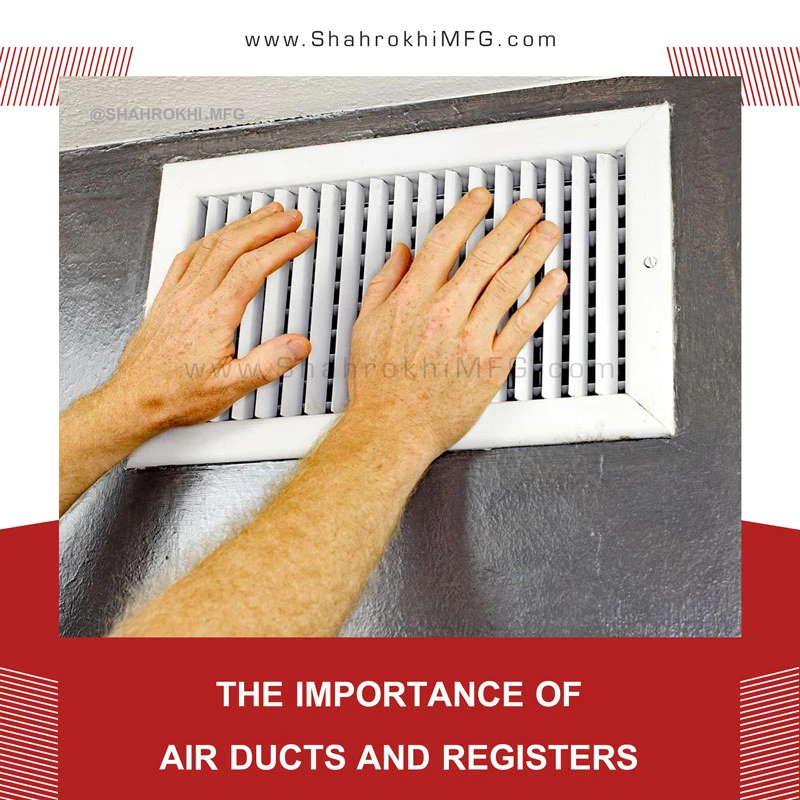
The importance of Air Ducts and Registers

What Are Air Ducts and Registers?

اهمیت دریچه های تنظیم هوا

Air ducts are the intricate system of tubes and related parts that distributes the airflow of your air conditioner (and HVAC system at large) throughout your home or commercial building.

Registers at the end of each air duct direct the airflow within a room or space. Supply air registers are not returns; they do not bring air back into an HVAC system. A return will have a permanent, unmovable grille. In addition, supply air registers and returns are also called “vents”.

Where Are Air Ducts & Registers Located?

Air ducts are located behind walls and floors and are visible in crawlspaces, attics, and basements or cellars. Some split-system air conditioners do not use conventional ducting, though ductless air conditioning may not be right for all homes or businesses.

Registers are installed on metal cans in the opening of a wall. For example, either up high toward the ceiling or near the base of a wall. Also registers are found in floors in older homes .

اهمیت دریچه های تنظیم هوا

How Do They Each Work?

Apart from the air ducts themselves, ducting includes other crucial components:

  • Vibration isolators, which minimize an operating HVAC system’s vibration
  • Metal cans allow the flow of air to move from the ducts to the registers
  • Dampers, which adjust the volume of air
  • Vanes, which smooth out air flow around turns

in order to have a balanced, comfortable home, careful sizing and placement of return and supply air ducts and registers is important.

Registers have bars that you can control with an adjustable damper (a lever, knob, or another movable part on one side of the register) to reduce or direct airflow.

What Makes Them Important?

اهمیت دریچه های تنظیم هوا

Ducting acts as the arteries and veins of your air conditioning system. They deliver the right amount of cool air to each room in your home or commercial space.

Registers help control the comfort level of a space by providing a way to direct airflow at the point it enters a room.

Best location for air registers

In the air conditioning system, a mistake in placing the air registers and not choosing the most suitable place to install the registers can cause many problems. problems such as energy loss, increasing energy costs, limiting the capacity of the ventilation system and many other things.

In this article, we are going to examine the most appropriate place to install air register and air return valves in the HVAC system and the problems related to not paying attention to these items.

Installation location of the air return register in the ventilation system

The presence of both air return and return valves in close proximity causes a competition for air supply and return. In this case, due to their proximity to each other, it leads to a short circuit between the two airs. For example, the register that directs the cold air into the room, if it is above the entrance door and the air return register is adjacent to it and lower, it causes the cold air to enter the room directly to the bottom of the room and the air return air register. to be transferred In this case, the air goes out quickly instead of circulating in the room.

HVAC experts call this air movement short-circuiting: supply air returns directly to the return duct instead of mixing with air in the cooled or heated space.

Poorly located vents and return air ducts like this can severely reduce the effectiveness of a cooling system and increase operating costs.


محل نصب دریچه رفت و برگشت هوا در سیستم تهویه

The location of the hot or cold air return air register in the basement and engine rooms

Placing the air register on the bottom of the door in basements and engine rooms is very common. This increases the operating costs of the heating or cooling system. In addition, the incorrect position of the valves in these places entails potential risks, including the risks of carbon monoxide emission.

Carbon Monoxide Hazards: Return air registers too close to oil or gas equipment may allow combustion gases or carbon monoxide into the air duct system, sending hazardous gases into the living space.

Be careful: You should not normally detect persistent CO in indoor air. Carbon monoxide gas indoors is odorless and colorless and can be deadly. Make sure your building has properly installed and working CO detectors and smoke detectors.


مکان دریچه برگشت هوای گرم یا سرد در زیر زمین و موتورخانه ها

Installing ducts and heating or cooling systems on exterior walls

Heating or cooling return air duct systems that place the return air register in the exterior walls of the building may have poor performance.

Some engineers believe that efficient and cost-effective design and proper selection of valves on internal walls is more suitable and standard.

These were examples of improper use of register in inappropriate places that we discussed. The placement and selection of the most suitable valve is a matter that requires careful expertise. Shahrokhi Industrial Group, the first and largest manufacturer of air control air register in Iran, can help you in this matter. Contact our experts now for advice and expertise.

قراردادن کانال و سیستم های گرمایشی یا خنک کننده بر روی دیوارهای بیرونی

Shahrokhi Industrial Group


Clean room filters and register

Clean room filters and register

Clean room filters and register

Clean room filters and register

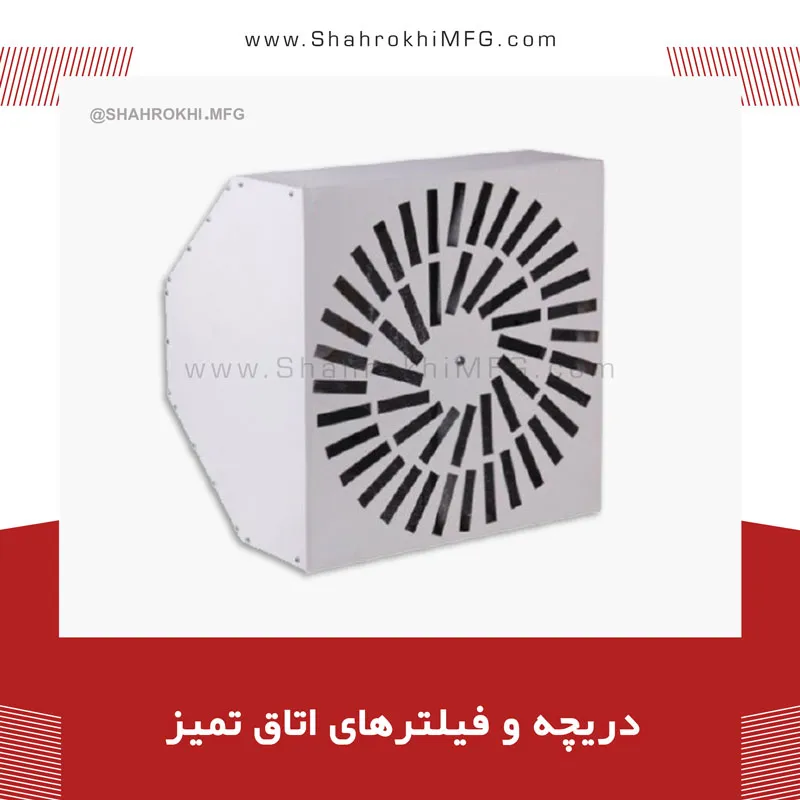
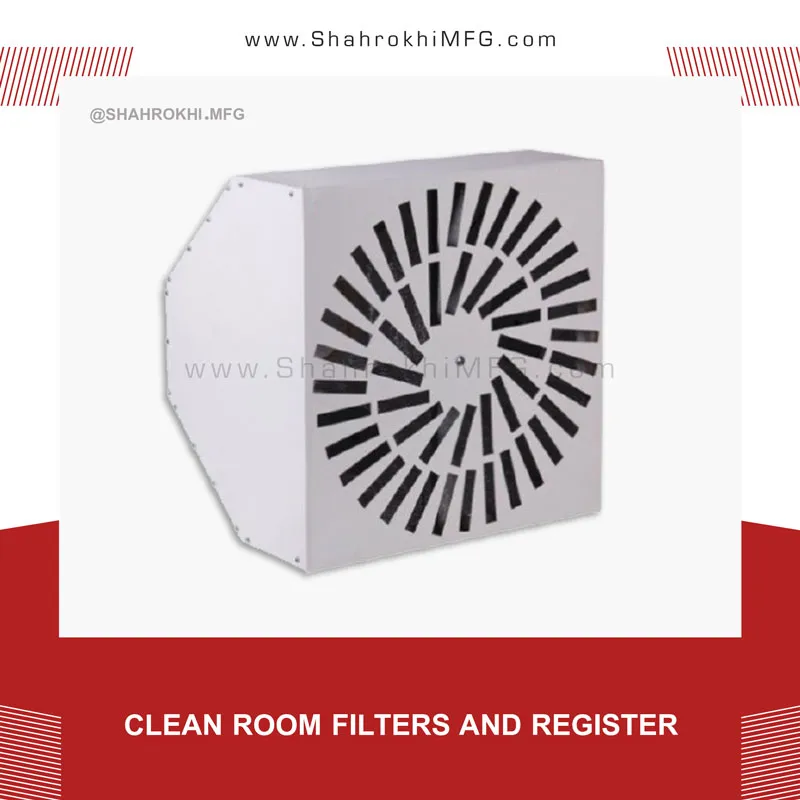
The main demand of the clean room industry is proper air conditioning and air quality. Air distribution in these rooms is done through solar vents with filters that are placed in filter holders (filter boxes), and in addition to that, to provide the required air and the number of times the air is changed into the rooms and the air is discharged from the inside. In a clean room, these types of valves are used to obtain the best physical parameters for circulating air..

Filter box

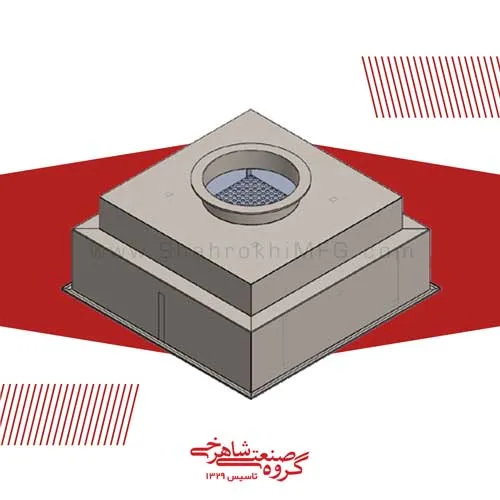
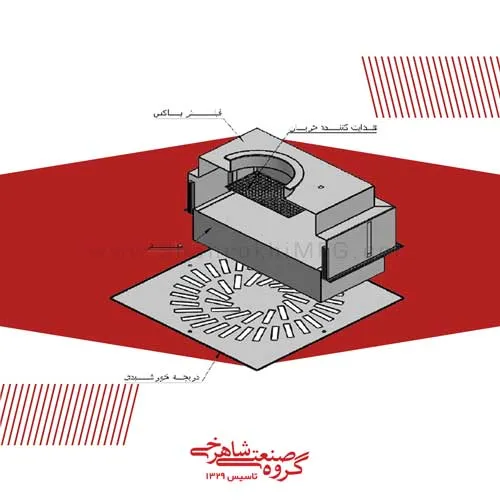
The main key to achieving clean air in clean rooms, such as drug production spaces, operating rooms, etc., is to choose the correct filtration method. Therefore, it is very important to choose a suitable filter and holder (filter box) that does not leak and does not reject the air flow without passing through the filter. Filter holders have 3 sections. Filter, filter box and air diffuser.

Figures 1 and 2 show a photo of the filter box from the front and back angles, and Figure 3 shows a disassembled filter box.


فیلترباکس شاهرخی

Figure 1- Front view of a sample filter box

فیلترباکس شاهرخی

Figure 2- The back view of a sample filter box

فیلترباکس شاهرخی

Figure 3- The disassembled filter box

Different plans and scenarios are adopted to reach different degrees of cleanliness, but ultimately the main element in each plan is the integration between the final filter and its filter box in the incoming air on the roof of the rooms.

The working process in the sanitary filter box is that at first the incoming air flow becomes completely uniform after passing through the flow equalizer and then it enters the sterile environment through the filter with the ability to absorb particles up to at least 95%. According to the design, the amount of particle absorption is determined by the filter). As a result, the air filter process continues at a very high level. These boxes are used in clean rooms that do not need heating and cooling systems.


Filter boxes can be used for recirculating air on the ceiling and wall.

solar valve

In some classifications of clean rooms, a common conventional method of a proper combination of clean incoming air with unclean air inside the room is used, which is based on the dilution of air in such a system.

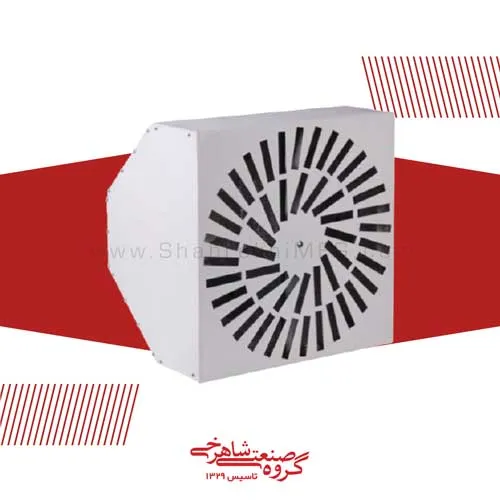
In order to have a perfect and diluted mixture in a clean room, the direction and speed of the incoming air flow is very important. The solar valves provide a suitable path for the incoming air at the entry point so that the required speed and direction are created for a perfect mixture.

The use of self-supporting blades, which were prepared by cutting and bending the surface of each valve itself, and creating a system of integration with the body of the valve, are a solution to have excellent air flow into the clean room.

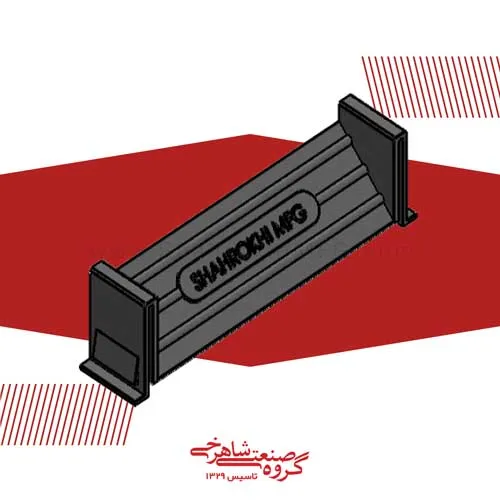
The use of ABS air flow guide, which is produced by plastic injection process and installed on the air register, is a solution to have excellent air flow into the clean room. In addition, another advantage of these valves is the removal of unwanted parts of the existing older model valves, which has made cleaning the solar valves simple and easy.


دریچه خورشیدی شاهرخی

دریچه اتاق عمل

The return air registers are also prepared simply so that by considering the speed on the surface of the valve and making accurate calculations to obtain the number and size of the bean holes on its surface, it is possible to gently move the air through the valves to prevent any noise. In order to keep the sound level inside the room as much as possible, extra is provided.

The size of the boxes and the partitioning conditions of the walls and ceiling in the clean rooms are such that after installation, the final level of the valve parts with the surface of the panels and other tools and accessories will be obtained completely.


Operating room air register

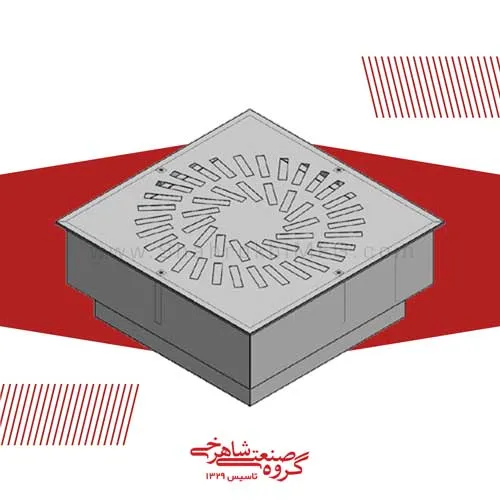
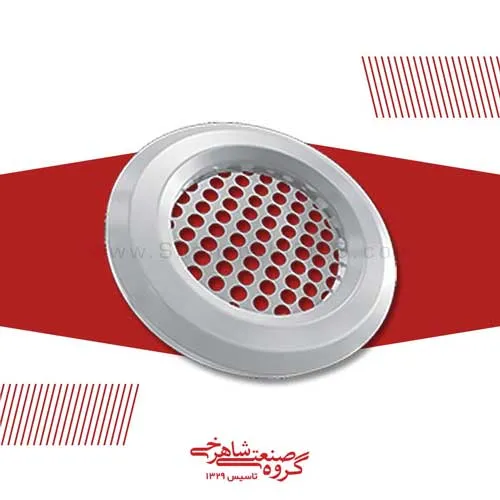
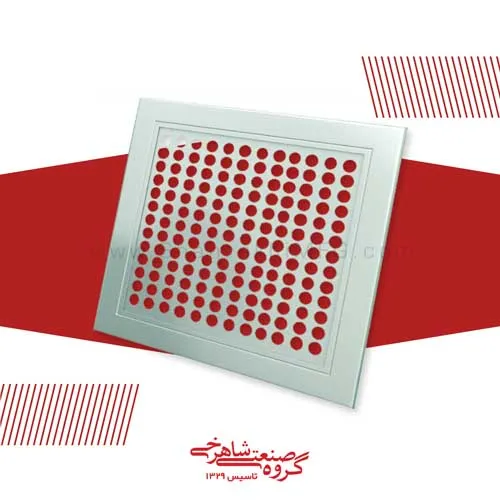
Operation room air registers are designed in two types, square roof and round roof with the ability to distribute air in a point for suitable applications in the air conditioning industry for use in hospital operating rooms or similar places. These valves are used for air intake and exhaust and distribute the air flow evenly. The operating room valves have a punched plate with 13 mm diameter holes that are easily installed on the channel. These valves have the ability to adjust the layers of air without any change in the volume, pressure and volume of the air.

دریچه اتاق عمل

دریچه اتاق عمل

Shahrokhi Industrial Group